Blog

  • The Eric Michael Nault Story – A Chiari Angel’s Fight

    The Eric Michael Nault Story – A Chiari Angel’s Fight

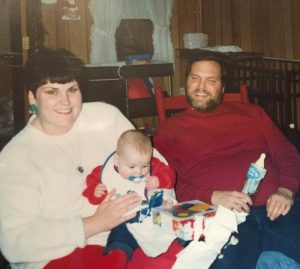
    During my pregnancy I remember being very unwell, writing in my journal, “there is something wrong with pregnancy, I know something is wrong with my baby”, at only 10 weeks gestation; proving that a mother always knows. At around 30 weeks gestation my unborn baby started to get chronic hiccups followed by trembling, lasting several minutes and several times per day. I begged doctors to run further testing, pleading something was wrong but it all fell on deaf ears. Baby Eric’s heart rate was strong and steady, my fundus was measuring right on time with gestation, so my concerns were dismissed. At 36 weeks gestation, I started having consistent and lasting contractions. After several hours I proceeded to the ER department, concerned I was in preterm labor. Stress tests were run, and the nurses dismissed me, asking me to come back the next day for a follow up. While running a stress test the following day after food, juice and changing positions, the doctor was called as Eric didn’t have enough variables in his heart rate. I can still hear the Doctor yelling at the nurses asking why I had been sent home the night before demanding them to get on the phone with the hospital in the next community and to make sure a neonatal team was on standby, because they would be expecting a new Mom tonight. I was terrified, as all my worst fears were coming true. I was transported immediately, where I was met by a huge medical team. Everything was moving so quickly, myself and my partner were in shock and terrified not knowing what would come next. After an emergency ultrasound, Doctors explained that we had a very tiny baby with a great deal of amniotic fluid and something was seriously wrong with my baby; exclaiming that an emergency C-section would have to be performed. At this point we didn’t understand what this could mean, or why I had so much amniotic fluid. This was why my fundus was measuring well and everything went undetected. My partner and I were living every parent’s worst nightmare. Thinking back, I recall crying and holding my boyfriend’s hand as they carefully lifted a very tiny completely blue baby hand from my stomach. When we all saw my breathless baby like a flip of a switch the operating room became chaotic. Doctors were in a mad rush trying to resuscitate my baby, who had no vitals and wasn’t breathing. I was hysterical, so the doctors sedated me. My boyfriend was becoming increasingly agitated, so they demanded that he leave. I can still hear the nurses voice yelling at him, “you are taking up time we need to save your baby, you need to trust us and cooperate, OUT”, before the anesthesia flushed into my system.
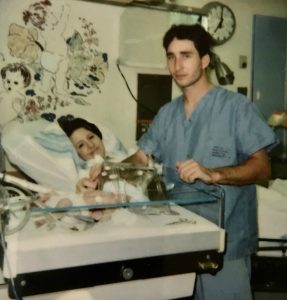
    After several hours I regained consciousness, family and doctors surrounded me trying to explain what they knew about baby Eric. They explained Eric and I would have to be immediately flown out to a larger center where they could properly care for my baby. Eric couldn’t support his own airway, he couldn’t suck, swallow, or move due to hypertonic muscles. He was having several seizures, all pointed to brain damage. At this point they had no idea what was wrong and could not conclude whether my baby would live. I recall saying I wanted to go see my baby and trying to get up out of the hospital bed, but the nurses told me I couldn’t see him, because I had just gone through a major surgery and he was too sick; we both had to rest for transport. When the nurses told me that, I flipped, telling them that come hell or high water, I was going to see him. I got as far as swinging my legs over the bed before I vomited everywhere. The nurses finally clued in that I was going with or without their help, so they laid me back down and wheeled me to the NICU to see him. I couldn’t even see my baby for he was so small and leads encased his body where he layed. They had his chin strapped up as every time it fell backward it would close off his airway leading to oxygen desaturation. They didn’t have the resources to intubate a baby at this hospital, so they decided to fly us out to Vancouver Children’s Hospital.

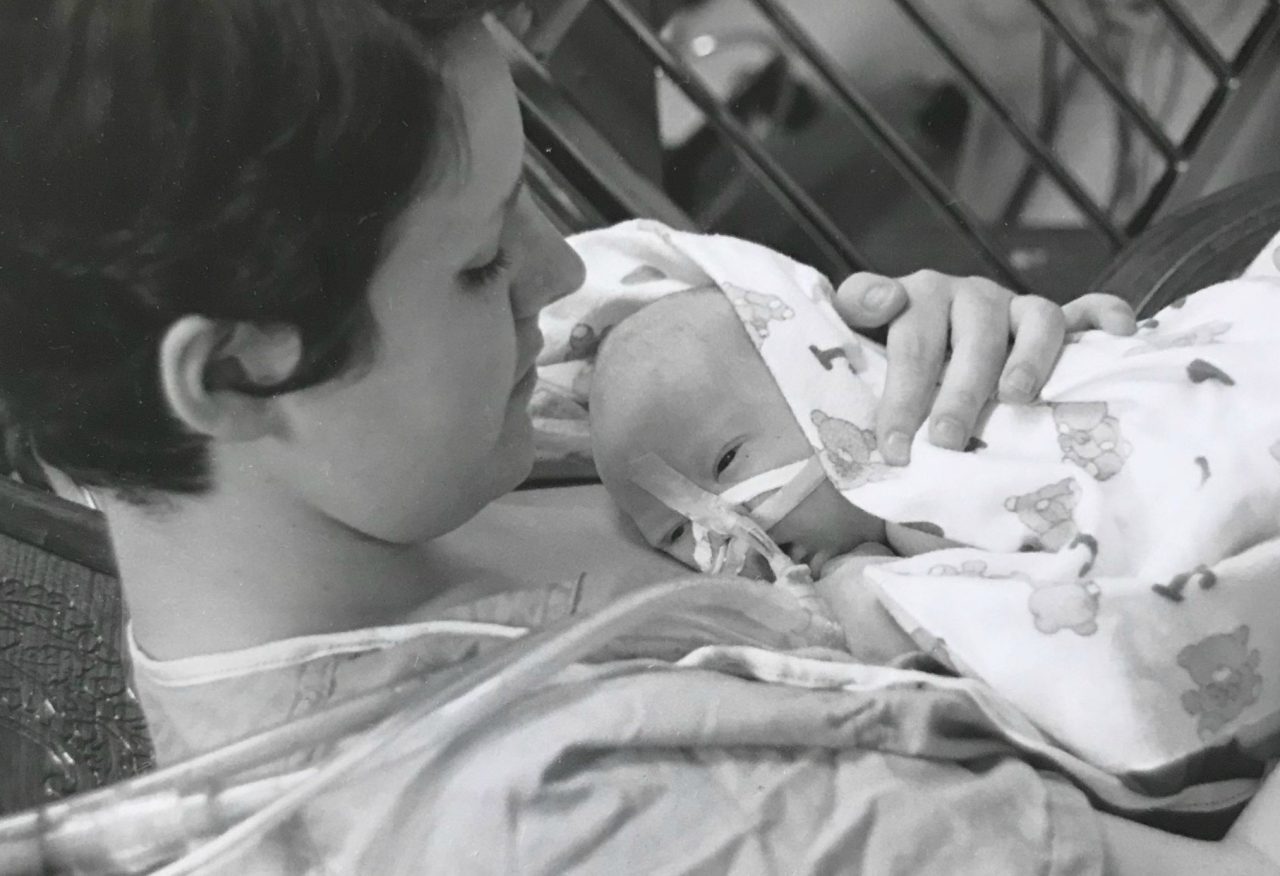
    The nurses and doctors kept me sedated for the first 4 days of being in Vancouver as every time I came to, I would start screaming for my baby and they would find me wandering the halls trying to find my baby. On day 4, they finally let my partner wheel me down to the NICU to see him. It was the scariest place I had ever seen. Rows and rows of incubators filled with tiny preemies with all kinds of machines keeping them alive. The nurse told me Eric was the biggest baby they had at 4 lbs. 11 oz. This gave me false hope, believing if he was bigger than all the others, he must have a fighting chance to survive. After several days of Eric in the NICU covered in wires, leads, and intubation tubes we still had no answers as to why our baby was born so ill. Eric was having up to 35 or more seizures per day, he was poked and prodded many times a day and underwent several tests; spinal taps, MRI’s, CT Scans and had several neonatal experts tirelessly working to find the cause of his many issues. Any parent who has been through this knows and understands the emotional roller coaster that comes with this experience. One day they tell you that your baby is improving, and they say he will beat this battle, and the next you’re told he wouldn’t survive the next 24 hours telling you to say your goodbyes; waking up all hours of the night, if you sleep at all, to pump your milk for a baby that isn’t there. You are walking to the hospital in the middle of the night just to be next to him because you can’t bear to be away. You are begging, pleading to God for your child to be healed. After 3 weeks they finally let me have skin to skin cuddles and started teaching us how to care for him. This isn’t the way it’s supposed to go; you’re supposed to go to the hospital, have a baby and take them home, right? Instead you walk around numb, you don’t remember the last time you ate, or showered, you just feel like you’re having an out of body experience, as if you’re watching this happen to someone else. You’re scared to leave their side for even a minute because what if it’s that minute that he leaves this world and you’re not there?
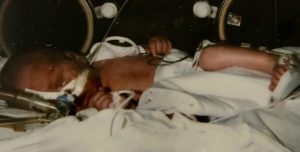
    We wouldn’t allow for anyone else to care for him, we did all his range of motion therapy, we did his bath time, and we did all his personal care alone because if a nurse or doctor touched him in a clinical manor he would be riddled with more seizures. After a month, the nurses started insisting we start taking better care of ourselves, so my boyfriend and I started alternating night shifts. My nights alone with him were my favorite, I would hold him all night and rock him. He would look up at me with his deep blue, soulful eyes and tell me all the secrets of the world. He had the oldest spirit I had ever saw, full of wisdom and love.
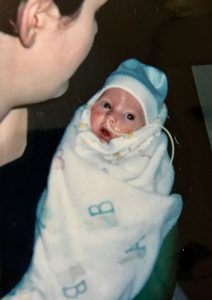
    After about a month we had a meeting, and it was then that the doctors told us we had a failure to thrive baby, his cells didn’t migrate to the right place at the right time, that his cerebellum and brainstem were severely underdeveloped. The statistics 19 years ago was that one out of one million babies were born like this and they had yet to find out what caused the illness. Our baby couldn’t regrow the parts of his brain that didn’t develop. He had gestational arrest at 32 weeks, he had scoliosis, spina bifida occulta, epilepsy and severe brain damage. Our child would never move on his own, suck or swallow or be able to interact and that he would most likely die of aspiration pneumonia. He would live his life in hospital more than out. I have worked with special needs adults with this type of quality of life, I could play the tape to the end, and I knew hanging on to him would only be for selfish reasons. I understood that my baby was in pain, I could see in his beautiful blue eyes, as I said before, a mother always knows. It was at this time Eric’s father and I decided to sign a” Do Not Resuscitate” order. It was without a doubt the single hardest thing I have ever done.

    We called our family to let them know of our decision and if they wanted an opportunity to say goodbye to Eric, they would have to travel down to do that as extubating was set for a week away. The doctors were certain he would pass away shortly thereafter. The family gathered, and we had our son baptized, pictures were taken, everyone had time alone to say what they needed to Eric, and he was extubated. Eric surprised us all; he just kept right on breathing, and he could support his airway after all. The hospital put us in a family room with our son, so we could spend as much time as we could with him in a less clinical environment before he passed.
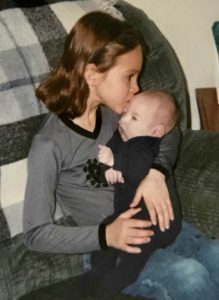
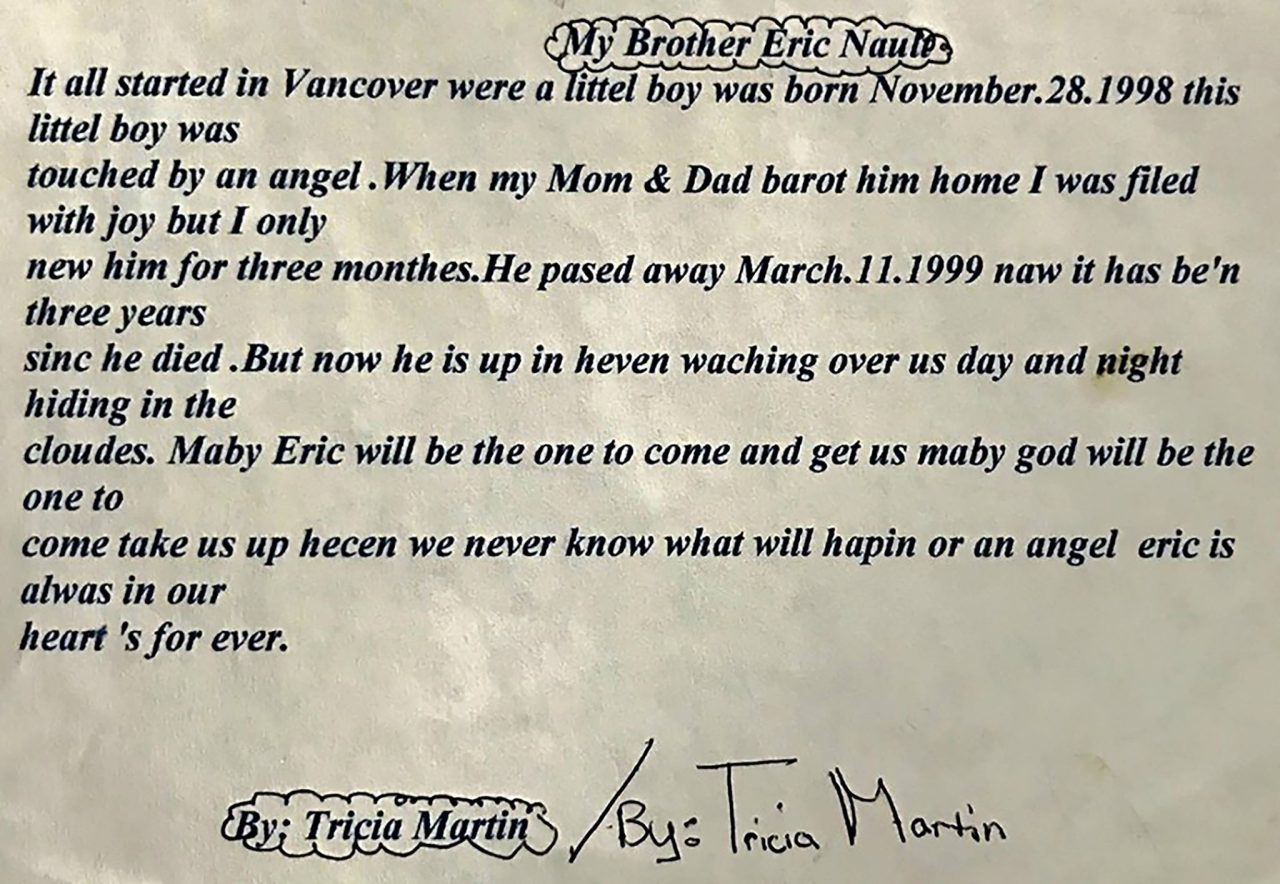
    Within 2 weeks, it was clear this child was a strong fighter and wasn’t ready to give up quite yet. We had another meeting and it was decided we would take him home. We wanted his big sister to have time with him and show him what a home was like. We took a 2-week crash course on neonatal nursing. We had to learn how to do his lung physio, how to suction him, and how to work a feeding pump and so much more. Eric was brought home February 10,1999. We did his 24-hour care until March 9th when he took a turn for the worse. He was diagnosed with aspiration pneumonia. This left me in a panic; I wasn’t ready to let him go, and I wanted him sent back to Children’s Hospital and be treated. We had an amazing Doctor who came to the hospital and took me for a walk to discuss why we made the DNR code and why we made the right choice for our son. I took my son home that day knowing we were running on borrowed time. His breathing became very shallow, he turned blue from lack of oxygen and on March 11, 1999 at 3:15 am our darling boy went home to be with his creator. The year following is a fog, I remember very little. I was deeply depressed but I knew I had to keep moving forward for my daughter, she needed me. I know she was hurting too but I was so consumed with my own grief, that I couldn’t reach out to her, I couldn’t handle both her grief and mine. My daughter and I have had to take a lot of time since to heal together. With that being said, the pain of losing a child is not something that you can run away from or attempt to forget; I relive my sons small time on this earth every single day.
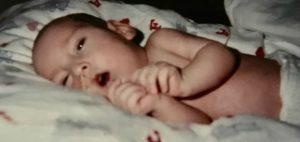
    Fast forward to 2005, I became very ill. It took 13 years for me to find out I had Chiari 1 Malformation and EDS and another 3 years too learn I too had Spina Bifida Occulta and Tethered Cord. I started to learn all I could on these conditions and joined many support groups. I was reading up on all the different types of Chiari when I came across Chiari Malformation type 4. It was described as one of the rarest types, when a baby is born with an underdeveloped hind brain or cerebellum. WHAT?! Did I just stumble across the reason as to why my son was born sick? Did I just stumble across the name of the disease that took my son from me? I printed out the info for Chiari 4 and Eric’s medical info and took it to my Doctor. The doctor and I had a long discussion and he agreed this was what my son had all those years ago, I just don’t think they called it Chiari 4 back in 1998. I was relieved to know, but angry. It took 18 years for me to find out what had happened to my darling baby and that was after all, genetic. They ran genetics on Eric but told us it was negative. Little did we know then that h-EDS was what I had and that they do not know the genes that cause it. I also learned many of us suffer from the MTHFR Gene where our bodies reject folic acid and B12, two vitamins I had always been deficient in and it can cause neural tube defects in babies.

    In closing, I would like to say, no parent should have to wait 18 years to find out what took their child from them. As a parent, no matter how your child passes, you will blame yourself. I had to work through some pretty hard moments and learn to forgive myself for this unknown genetic disease that not only took my son Eric, but now has also made my oldest daughter Tricia ill. This is unacceptable to me. This is why it’s so important that we raise awareness and educate our doctors, so no mother or father has to wait 18 years to understand their child’s conditions or death. This is way the work that WTF and Chiari Bridges does is so very important to me and why I am always asserting that we be tested for all comorbid conditions. Rarely is Chiari just Chiari, so please take the time to undergo all the proper testing for all the comorbid conditions.
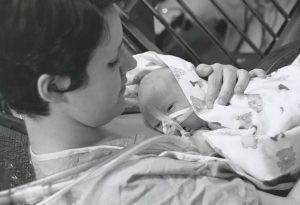
     

    Eric Michael Nault November 28th, 1998 – March 11th, 1999.

    Thank you for taking the time to remember my dear Eric with me,
    Amy Schmalz
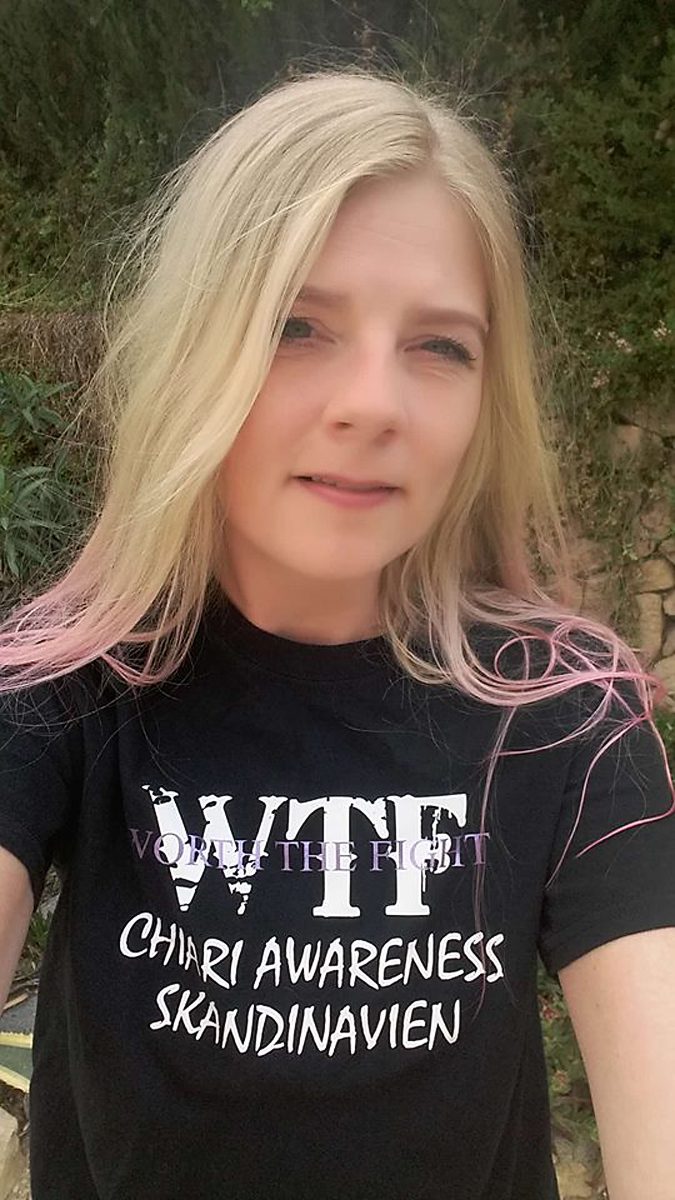
  • The Majbrit Jessen Story – A Chiari Warrior’s Journey

    The Majbrit Jessen Story – A Chiari Warrior’s Journey

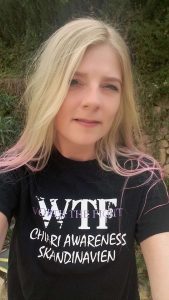
    I had a rough journey with these conditions and I am sharing it to help show how complex we can be and how much we need the medical community to step it up a notch (or ten)! I grew up in Denmark, where I lived when I was diagnosed and had my first surgeries.
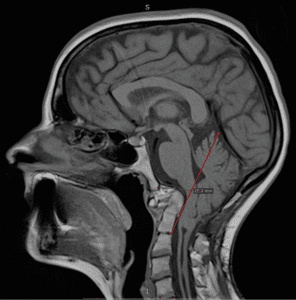
    I exhibited various pains already from early childhood. As very young child, I would scratch big wounds in my head to my parents’ great frustration. I also suffered from headaches at a very early age, but my older sister had done the same, so when teeth correction helped her it was also hoped it would with me – and it did. Then started the pain in my back, shoulders and arms and that pain slowly moved upwards and developed. I was sent back and forth between physios and rheumatologists but all I got was scoliosis and hypermobility. I was told it was nothing to worry about and just do some physiotherapy. I was in a bad shape when I finished my teens and despite trying, I couldn’t really manage a job. At one point, I was seeing a chiropractor for misplaced hips and he wanted to check the x-ray that the public system had done of my neck and which was deemed clear. Here I had my first “real” diagnosis, Klippel-Feil malformation of c2-c3, which I was then told, could not cause any problems and was common (which it absolutely isn’t).

    Years passed by with various periods of severe pain flares, flares that felt nothing like the pains I had before. But no doctor was really believing me. I had a spontaneous collapsed lung a couple of times in this period and ended up with surgery for this (I woke up under this surgery which later also turned out to have a significance). At 25, one day I had a sudden and severe onset of symptoms – a pain in the back of my head feeling like two stabbing knives. This did not resolve and after several attempts with various medicines, that I only got sicker from, I finally saw a new rheumatologist whom again treated me with harsh accusations of laziness and psychological imbalance. I can assure you he was the one bringing on my tears that day, despite the extra severe pain I had been in for weeks. I was placed in the care of the hospital physios and after a while, it became clear to them that there was something really wrong and they got me to see another rheumatologist, who in turn took their word and referred me for an MRI. I had only just turned 26 when I was diagnosed with Chiari 1 Malformation and Syringomyelia – in my full spine.
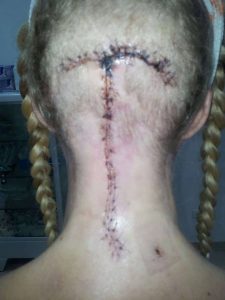
    I did a bit of internet research as information in Danish was very sparse and realized there was a certain number of bad outcomes due to something called Ehlers-Danlos Syndrome, Retroflexed Odontoid and Basilar Invagination. I asked my neurosurgeon, who was supposed to be the best in Denmark at this point, about these things – he claimed I didn’t have any. However, he did agree to refer me for Ehlers-Danlos evaluation. Here I was told I did not have that either. However, I was bordering on a similar connective tissue disorder called Marfan Syndrome, which they still could not diagnose me with due to my heart and eyes not being faulty. I had my first decompression surgery in December 2006. It was rough. I reacted badly to anesthetics and to the morphine and I also lost a lot of spinal fluid. I could not raise myself up the first month which I thought was normal. Slowly, I got better, and imaging showed my syrinx shrinking. Two and a half years later, though, I started experiencing dizziness and nausea and though my first surgeon didn’t believe me, imaging finally showed a big collection of fluid outside my spinal cord originating from a hole in the duraplasty used to close after tonsillar cauterization at my first surgery. I tried talking to the surgeon about concerns of Klippel-Feil and instability, that I had read about, but they would not hear of it and said that for now they would just focus on this issue. So, this was repaired, and I moved to Spain with my boyfriend at the time. I was placed on a disability pension from Denmark and that enrolled me in the Spanish public healthcare. I did, however, in the meantime follow up on my concerns and contacted a specialist, who had written about the Klippel-Feil and Chiari connection, and he straight away stated I had some severe issues with my odontoid and needed it removed and my neck fused to my skull. My first meeting with a surgeon in Spanish health care came up and he just looked at my imaging two minutes then stated my problems were way bigger than Chiari and Syringomyelia. He also diagnosed a severe retroflexed odontoid and Basilar Invagination – so severe he had a hard time understanding how I could breathe, let alone walk. But given my reasonably good condition, he opted to postpone these surgeries as they are big and not without risks.
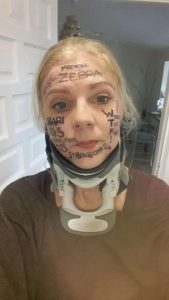
    A couple of years of enjoying the benefits the climate change gave me (and likely putting my head in the sand) went by but then I could no longer ignore the fact that I was getting worse. I was in a rough period with other matters of life, so it took a while before I realized I couldn’t escape the changes in my body. I started losing weight amongst other things and after a quick detour of fear of stomach cancer, I finally realized that everything that was going on was related to my brainstem compression. So, I went back to the neurosurgeon. He ordered some testing but before it could be done, I ended up admitted urgently after I stopped breathing one night. From here started a roller coaster. I didn’t feel right about their suggestions and the surgeon that was going to operate didn’t feel very secure himself even. I ended up getting transferred to a private hospital in Barcelona that calls themselves a “Chiari Institute.” Had I known what I do now, I would never have paid the fee for a filum release, but the doctor claimed this was what I needed and well… It was worth a shot in this urgent situation. He then sent me home, claiming I was cured. I didn’t feel right and breathing through the night was still a problem, so I started sending my imaging to experts around the world and working on getting referred to another hospital in Spain’s public health with higher expertise. All these experts claimed I wouldn’t have long to live unless I had this odontoid approached.
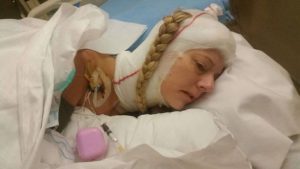
    An American expert, however realized I had even more going on and that my gut feeling about the first Spanish hospital was correct – when I confronted them with these things they backed out. He also explained to me why he thought I indeed had this Ehlers-Danlos Syndrome too. Fast forward, long and rough fights with health care and the Danish system that refused to take any responsibility despite the first doctor who didn’t see a bone poking more than a centimeter into my brain and almost crushing my brainstem, another public health Spanish doctor who was mortified they had diagnosed me like they did in Denmark and changed my Chiari 1 diagnose to a Chiari 1.5, I finally found some Spanish doctors in private care, that I would trust to take on my case – and that my parents could just find the money for, through a loan on their house. Ideally, I would have gone to this doctor in America, but price and decline didn’t allow.

    October 2016 I finally had a partial odontoidectomy and a fusion, which beyond doubt saved my life. It was a rough ride, for both me and the surgeons. They had to deal with complications related to my anatomy, to the mess the first surgeon in Denmark had left – he had indeed damaged my muscles more than I ever knew – and to the problems relating to the soft tissue. I do know they did a great job, but due to all the mistakes, how complicated my case was and is, I am unfortunately not done. I have ongoing issues and though some of these could have been avoided with the right approach from the beginning, some are just the way it is with these conditions.

    I hope that my story will inspire other to take a step back and get better investigated – by real specialists – before letting anyone start cutting. Also, I hope it will serve to see how much we need the medical community to step up and keep up to date with research. These are serious conditions and doctors all over the world are literally playing with our lives. Please help spread awareness – educate yourself and others and ask for raising the standard of care for these complicated conditions.


  • Submit An Article For Publication Consideration

    Have you written something that you think would be of value to the Chiari community? Consider publishing it with us! It might be exactly what someone else needs to hear for them to make it through their next mile of the fight!

    Not all of our pieces are technical pieces. We want articles that are encouraging, uplifting, and even those that might be seen as controversial. We feel it is both necessary and prudent in our fight to talk blatantly about what Chiarians go through at the hands of our medical professionals and insurance companies alike (in a general sense), but because we don’t want anyone to get “blacklisted” by those they must do business with, we have certain protocols in place to help protect the identities of authors that do such controversial pieces. Please see our Author Submission Agreement and ensure that you are agreeable to the terms before submitting your article for consideration. We are very particular about violating copyright laws, so the signed agreement is required before publication.

    We have limited the character count to 10,000 characters including spaces (that is just over 2 full, typewritten pages). Anything more than that lessens the chances of it being read by our readers. (If you desire to go over that, it will take approval from our editor. Submit what you have with the limit and when she contacts you about your story, you can request what you would like to add that makes it exceed the limit.) So think carefully about what you want to share and start writing!

    [ninja_form id=12]

  • US Government Officials Endorse Inhumane Torture of Chronic Pain Patients

    US Government Officials Endorse Inhumane Torture of Chronic Pain Patients

    TORTURE EXISTS IN 2018 IN THE US AND IT IS SPREADING GLOBALLY. IT’S HAPPENING IN MEDICAL FACILITIES. IT’S HAPPENING TO CHRONIC PAIN PATIENTS (CPP), PEOPLE WHO ARE RECOVERING FROM SURGERY AND TRAUMATIC INJURY AND PEOPLE WITH PAINFUL, INCURABLE DISEASES. THE GENERAL ASSEMBLY OF THE UNITED NATIONS HAS GONE ON RECORD STATING THAT, “UNTREATED PAIN IS TANTAMOUNT TO TORTURE OR CRUEL, INHUMAN OR DEGRADING TREATMENT OR PUNISHMENT.” [1] BY DENYING PAIN CONTROL TO PATIENTS WITH ACUTE OR CHRONIC PAIN, WE ARE LOSING A BASIC HUMAN RIGHTS ISSUE.

    Now is the time for us ALL to UNITE and take ACTION!

    “Opioid Crisis” is a new buzz term being overused by national news and government officials to evoke a negative feeling about a drug that was created for helping people. The definition of “crisis” by Merriam-Webster dictionary is partially defined as “an unstable or crucial time or state of affairs in which a decisive change is impending; especially: one with the distinct possibility of a highly undesirable outcome.”

    There is much ignorance from our government officials. One example is from the US Attorney General, Jeff Sessions. In a visit to Tampa in February, Sessions remarked, “I am operating on the assumption that this country prescribes too many opioids. People need to take an aspirin sometimes and tough it out a little.”[2] This statement underlies the lack of understanding of chronic pain and its detrimental effects among the government officials who have been tasked with solving this opioid crisis.

    President Trump made this comment on March 19, 2018 and was quoted in an article by NPR: “Whether you are a dealer or doctor or trafficker or a manufacturer, if you break the law and illegally peddle these deadly poisons, we will find you, we will arrest you, and we will hold you accountable.”[3] While he is attacking the problem in multiple ways, he still seems to want to go after the legal prescription side in this battle.

    Sixteen senators (now 15, since Al Franken resigned) had approached the DEA and requested and received a 20% cut in production in legal opioids in 2018 after cuts in 2017, and they want more cuts in 2019. Less production of legal meds creates big problems. And the DEA and Sessions have responded to this request, proposing a new rule that would allow the DEA to reduce the amount of opioids that drug companies can manufacture and sell, if it believes that a company’s opioids are being diverted for misuse.[4] Meanwhile, hospitals are already experiencing a shortage of many injectable opioids used for surgical anesthesia and for the treatment of post-surgical, traumatic and disease-produced severe pain.[5]

    There have been a lot of statistics used to sway opinions in this fight. A group of anti-prescription opioid zealots known as PROP (Physicians for Responsible Opioid Prescribing) have made claims about prescription opioids that most patients and doctors alike would disagree with. Members of PROP, including Andrew Kolodny, MD, an addiction specialist who serves as PROP’s executive director, have been very influential in the media and with government bodies alike. They were very involved with the formation of the 2016 CDC Opioid Prescribing Guidelines. In a 2015 Q&A for the Kolmac Outpatient Recovery Center, Kolodny said, “Many Americans are truly convinced that opioids are helping them. They can’t get out of bed without them.”[6] And in an interview with The Fix in 2016, Kolodny was quoted as saying “Heroin users will use some of the exact same language pain patients use to explain how opioids help them. They wake up and feel agonizing pain, and they take their opioid and their pain becomes bearable.”[7] While PROP and its members are busy trying to convince the public and the US government that opioids are almost never appropriate for chronic pain and that patients who use long-term prescribed opioid therapy are tantamount to addicts, the science seems to disagree. In a recent white paper published by the Alliance for the Treatment of Intractable Pain, a review of the applicable research laid out the case for opioid prescriptions for chronic pain being both effective and posing a very low risk for addiction.[8]

    In addition, the Centers for Disease Control (CDC) continued to count all deaths with legal or illegal opioids in a body, as an opioid death and using these statistics as an impetus to develop their 2016 guidelines, as well as listing them on their website to be cited by the media and other government officials who were tasked with developing policies to curb the overdose crisis. Using these statistics, it is no wonder that government officials came away with a belief that prescribing fueled the overdose crisis. However, in an article in April 2018 in a publication of the American Public Health Association, four CDC officials quietly admitted that the CDC statistics were miscalculated, and over-inflated by about double.[9] So far, the CDC itself has not officially admitted that the numbers are wrong, and continue to stand by their 2016 prescribing guidelines.

    The PDMP (Prescription Drug Monitoring Program) was an answer government officials put in place to ensure that legal drug users were brought into compliance with the new standards being enforced on doctors and pharmacies. The legal prescription opioid users that still have access to pain medication sign contracts, subject themselves to random drug testing and agree to use one pharmacy. Well, the reduction in production of opioids in 2018 has caused many pharmacies to have a drug shortage. Many pharmacists are also reticent to fill opioid prescriptions out of fear of the DEA, or worry about fueling the opioid crisis because of the false media narrative. Pain patients drive to the doctor’s office to pick up their paper prescription, take it to their pharmacy and wait. If that pharmacy is out of your medication, you now go to another pharmacy and this trend continues in hopes of a refill. Then we need to call our doctor’s office back and let them know we filled our prescription at another location. This is a lot on people with chronic pain.

    There is also a negative stigma attached to having to take pain meds. Many chronic pain patients take prescription opioids to continue meaningful work. This could be a huge problem because they are afraid to speak out, afraid of losing their job, or at least bringing suspicion upon themselves from employers. Many patients are afraid that if those around them know they take pain medication, they will be seen as addicts. But it is time to brush off the stigma and the fear and to stand up for our rights to access proper and effective medical treatment. If we don’t, we may lose access permanently and keeping our jobs, social lives, and other important activities and relationships will not be possible due to disability from pain.

    Doctors that want to be doctors are now caught up wasting time in government “guidelines” or laws and pressure from insurance companies that do not want to cover pain control prescribed by our doctors. Many doctors who have continued to prescribe despite the current hostile regulatory environment have been threatened, raided, and even arrested by the DEA.[10] Our doctors are having to choose between upholding the Hippocratic Oath and keeping their ability to practice medicine and earn a livelihood altogether.

    On April 3, 2018, the Centers for Medicare and Medicaid Services adopted a new policy governing opioid prescriptions for Medicare patients. While they backed down from a proposed “hard limit” where opioid prescriptions above 90 mg MME would be rejected at the pharmacy and could only be overridden by the insurer, they did end up passing a 200mg MME hard limit, and a “soft edit” at the 90 mg MME mark. This requires pharmacists to speak with the prescribing physician about the appropriateness of the dose for all prescriptions above 90MME. The pharmacist must then document this conversation and may fill the prescription at their discretion. The new rule also limits all new opioid prescriptions to 7 days, meaning Medicare will no longer pay for new opioid prescriptions that last more than 7 days, regardless of the circumstances. Many Chiari and EDS patients undergoing major surgery such as decompression or fusion, will no longer be able to receive more than a week of post-surgical pain medication without returning to their doctors for a new prescription. And patients who develop severe chronic pain in the future may not be able to get appropriate treatment for their pain. The only thing that kept CMS’ original proposal of a hard limit at 90mg MME was a severe backlash resulting in hundreds of strongly worded comments on their public docket from patients and physicians alike.[11] It is proof that our voices do matter and that we can make a difference when we speak out.

    Despite some backlash from the chronic pain and medical communities, the government pushes forward with their agenda. Some states have lost their right to proper pain control and many are being threatened. It is time for those patients who have been sitting on the sidelines waiting for someone else to fight this battle for them, to rise and make some noise. It’s time for ALL of us to unite to make changes for ourselves and the future Pain Patients and our children. Imagine our children, inheriting these conditions from us and suffering the same or worse pain as we do, and having zero access to effective pain treatment because we allowed our government to take away one of our most effective treatment options!

    What we all need to do is contact our elected officials. It easy to type up your email regarding your story and what pain meds mean to you or loved ones. You can look up your elected officials email address and copy and paste your email and send to many people. The elected official I spoke with said they have not heard from Chronic Pain Patients. Please take time and do this. You can send out emails laying down from your bed. You can also follow our CALL TO ACTION posts, which will inform you of key legislation and administrative actions and how you can act to make sure that our voices are heard.

    My voice is one, but if many are sent in, they might listen. There is strength in numbers and together, we CAN make a difference! Please help.


    [wpedon id=”4396″ align=”center”]


    References:

    1 Tennant, Forest. “Editor’s Memo October 2017: United Nations Says Untreated Pain Is ‘Inhumane and Cruel.’” Practical Pain Management, PracticalPainManagement, <www.practicalpainmanagement.com/treatments/pharmacological/opioids/united-nations-says-untreated-pain-inhumane-cruel>.

    2Slattery, Denis. “AG Sessions Says Patients Should Take Aspirin or Suffer through Pain to Prevent Opioid Addiction – NY Daily News.” Nydailynews.com, New York Daily News, 8 Feb. 2018, <www.nydailynews.com/news/national/sessions-patients-aspirin-fight-opioid-crisis-article-1.3808114>.

    3Horsley, Scott. “President Trump Vows To ‘Liberate’ U.S. From Opioid Crisis.” NPR, NPR, 19 Mar. 2018, <www.npr.org/2018/03/19/594999711/president-trump-vows-to-liberate-u-s-from-opioid-crisis>.

    4Anson, Pat. “Sessions Wants More Cuts in Opioid Production.” Pain News Network, 17 Apr. 2018, <www.painnewsnetwork.org/stories/2018/4/17/sessions-wants-more-cuts-in-opioid-production>.

    5 Bartolone, Pauline. “The Other Opioid Crisis: Hospitals Are Running Short of Powerful Painkillers.” Los Angeles Times, Los Angeles Times, 16 Mar. 2018, <www.latimes.com/business/la-fi-opioid-painkiller-hospitals-20180316-story.html#nws=mcnewsletter>.

    6 Kolodner, George. “Q&A: Dr. Andrew Kolodney, Chief Medical Officer, Phoenix House.”Kolmac Outpatient Recovery Centers, 14 Dec. 2015, <www.kolmac.com/2015/12/qa-dr-andrew-kolodny-chief-medical-officer-phoenix-house/>.

    7Siegel, Zachary. “Pain Patients Fear the Future Amid Opioid Crisis.” The Fix, 27 Nov. 2018, <www.thefix.com/pain-patients-fear-future-amid-opioid-crisis>.

    8Lawhern, Richard A. “Prescription Opioids and Chronic Pain.” The Alliance for the Treatment of Intractable Pain, Mar. 2018, <www.atipusa.org/2018/04/02/atip-white-paper-on-prescription-opioids-and-chronic-pain/>.

    9Seth, Puja, et al. “Quantifying the Epidemic of Prescription Opioid Overdose Deaths.”American Journal of Public Health, 7 Mar. 2018, <www.ajph.aphapublications.org/doi/10.2105/AJPH.2017.304265>.

    10Bernstein, Lenny. “DEA’s Opioid Crackdown Brings Arrests of Prescribers, Pharmacists.” The Washington Post, WP Company, 2 Apr. 2018, <www.washingtonpost.com/national/health-science/deas-opioid-crackdown-brings-arrests-of-prescribers-pharmacists/2018/04/02/64ded32a-368f-11e8-8fd2-49fe3c675a89_story.html?noredirect=on&utm_term=.ef5781020422>.

    11Roubein, Rachel. “CMS Tweaks Opioid Proposal after Backlash.” TheHill, The Hill, 3 Apr. 2018, <www.thehill.com/policy/healthcare/381493-cms-tweaks-opioid-proposal-after-sparking-backlash>.


  • Our Vision

    Our Vision

    Like most of us, when my symptoms started, I felt very alone. I was blessed to have family and friends that helped me through and cheered me on, but there was a part of the fight that only those directly going through it can understand. At that time, online support groups were far from what they are now. The support groups have definitely improved, but there is still so much more that we need. We need knowledge of the studies that are already out there! We need hope for the future! We need training in self-advocacy! We need help in trying to get our bodies and minds as healthy as we possibly can, because like it or not, things can get much worse than they already are. It was from our desire to help meet those needs, that the Chiari Bridges vision began!

    Empowering With Knowledge!
    Chiari Bridges aims to challenge everything we have been taught about Chiari and its comorbid conditions, and write about them in a way that makes them easier to understand. Although, because we know how hard it can be to get our doctors to listen to us, we will do everything we can to supply the studies behind the facts that we write about (that is why our citations are in red, so they are not overlooked). Knowledge is power! Once we as a community have a better understanding of all that is likely to be going on in our bodies, we can arm ourselves with the studies and take them to our doctors and show them the standard of professional knowledge that we expect! The bar has to be raised, for our radiologists and doctors alike, and they are not going to raise the bar for themselves. We have to inspire them to do that and we are going to raise the roof until they do!

    Raising Our Bar!
    One of the biggest problems we see amongst Chiarians is that our broken bodies have degraded our spirits and our confidence. It is time for us to learn to believe in ourselves once again! The doctors that we were taught to respect, got their knowledge by studying. And many have dropped the ball in their studying, yet they continue to operate on our brains, answer our questions with wrong answers, and deny our symptoms, knowing that they are not knowledgeable at all of our condition and its comorbidities. They like to “act” like we are crazy enough to think that we could wrap our brains around medical concepts that their narcissistic disorders incline them to believe that only medical professionals could understand. Well, they truly have underestimated the reality of all that our big brains can truly accomplish! We cannot let their ineptitude become ours, because it is our brains on the line, not theirs! We plan on creating a venue to share about our doctors, the good and the bad, in a way that decreases the potential for legal liability. We have a right to share our experiences – we just need to do it in the right way.

    Encouraging Hopes and Dreams!
    When it comes to conditions such as ours, the first things to come under attack is our hopes and dreams for the future. Even when we start out being hopeful (often because our doctors understate the significance of what has happened to our bodies), by the time we are decompressed and we find that we are still symptomatic, those hopes and dreams quickly diminish. I have been quoted as saying, “If Chiari has stolen your dreams, dream again!” I still believe that and have been in a constant state of having to practice it. We may not be what we originally wanted to be, but if we continue to see all that we can do and not just what we cannot do, we can dare to dream again! We are all multifaceted human beings with broad gifts and talents. We might not be the athletes we once aspired to be, but that says nothing of our strength. We all have the potential to change the world around us! You might be an artist that hasn’t practiced your art in years – start practicing again! You might have always thought about writing books, but because of your diminished hope for the future, you haven’t written in years – pick up a pen and start writing again! The only way to ever know your true potential is to try and try again! Dare to dream again! 
    Helping Chiarians Thrive!
    While I cannot go into much detail on this topic right now, we do have plans in the works to help encourage Chiarians to gain back a sense of control and live out their passions. Some have already started, as we aim to encourage help with self-advocacy, health and fitness, political lobbying awareness, and the like. But we also plan on encouraging Chiarians to start those businesses that have been on their hearts for so long (not multi-level marketing ploys either, but authentic, heart-inspired, creative businesses), and helping get the word out that it is Chiari owned. We as a community can accomplish so much more, but we need to work together to do it, and start applauding one another instead of tearing one another down! We all need a new chapter in our lives, where we overcome and succeed in the things planted in our hearts! 

    Passion and Motivation to Create Change in Our Community!
    When we first embarked on building this bridge, I realized that my vision was much bigger than my ability to do it alone. Therefore, I sought out certain people within the community that were passionate about specific aspects that can help our community as a whole. Some loved the idea and still serve on the Chiari Bridges team. Some are on the team and just starting to give birth to all that is in their hearts to accomplish. (I absolutely love fresh ideas and fanning the flame until they happen!) Not everyone loved the idea though. Some saw it as a threat to their own projects. They mocked me and one called me “&*%@ing crazy” (she had no idea how right she was). Instead of taking us up on the offer, she made every attempt to try to stop us, and she and her friends have been reporting every image that we use and claiming it as their images. (Good luck with that!) If wanting to create change makes me crazy, I will gladly wear the crown! Let them talk and let’s do this anyway! While they are busy gossiping, we see an increase in Chiarians losing their battles every year. Last year, two of my good friends ended their fight. That’s two too many! We have no desire to compete with anyone or any other non-profits, especially the ones that serve to try and benefit (and not exploit) our community (that childishness has only served to hurt our community). We actually want to cheer on those organizations, individuals and groups in what they are doing and do all we can to help generate support in their efforts. There really is enough need in our community for them to do what is in their hearts to do and still be active and true to what is in our hearts to do. If you have passion and motivation, and just need an outlet or help doing it, tell us about it. It takes a village working together to bring about change!

    Oh, and by the way, our vision for change is global! Our bar is not low. We aim to change the world and want to connect with those who desire the same!

    Michelle Cole
    President, Chiari Bridges, Inc.


    [wpedon id=”4396″ align=”center”]

  • The Ryan & Zona McGee Story – A Chiari Angel’s Fight

    The Ryan & Zona McGee Story – A Chiari Angel’s Fight

    Zona McGee was blessed with a vibrant and beautiful little boy on July 2nd, 1993. She named him Ryan Andrew and fell in love with his sweet face the second she first held him. He looked just like her! Her husband, Kevin, and daughter Crystal, eight-years old at the time, were over the moon as well.
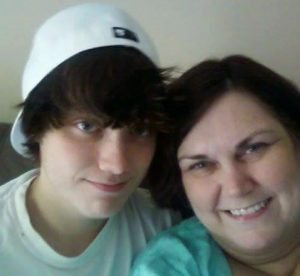
    Zona had been battling a genetic kidney disorder her entire life, causing both of her pregnancies to be considered high-risk, so when her second delivery and birth went well, she was elated. She counted her blessings and relaxed into the day-to-day tasks of being a young mother. Her life was happy, and she adored her children very much.

    By her beaming account, Ryan was a gregarious and charming little boy. “If there was something to explore, he would be all in it,” she told me. He had more energy than she knew what to do with and she kept him busy with stimulating activities and adventures. He was sweet, kind, and loved to make people smile, especially his sister, with whom he shared a unique bond.

    Watching her children grow into responsible young adults made Zona immensely proud. She had many wonderful memories of her family through the years. Because her kidney disease is genetic, and other family members suffered as well, she had worried that her children may inherit the gene, but neither did. Ryan was a very bright, energetic, healthy child. Throughout his childhood, Ryan’s well-child checkups always received A+ reports.

    However, when he was 15, his physician noted an incidental finding of minor scoliosis. Because Ryan did not complain of pain, the doctor decided to just keep an eye out for future changes. Ryan’s teenage years were happy. As he matured, his high energy settled down, and he became more introspective. He often spent his free time gaming on the computer, broadcasting on his YouTube channel, playing guitar, and enjoying life with his friends and family. Music was a major part of his world. He loved everything about it: listening, writing, and playing. He often shared his songs and favorite bands with his proud family.

    Ryan was a good student and took a local job after graduating from high school. He loved working and earning his own money. By all accounts, Ryan was a completely normal, functioning, and on-target, young adult. He was doing what most recent high school grads do – living life, having fun, and trying to decide what profession he might go into.
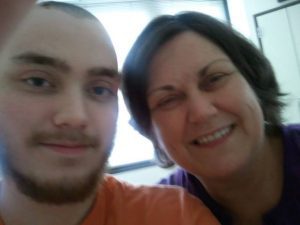
    He was also heavily involved in organ donor awareness. Although Zona had been doing remarkably well for years, during this time, her condition began to rapidly decline, and she was put on a kidney donor list. She had a calling to act and started a blog, which led to a passionate fight to spread awareness about the importance of donating organs and tissue. Ryan fought alongside her and made the decision to become a donor himself. Little did they know, Ryan’s decision would end up saving many precious lives, including his own mother’s.

    In May of 2013, Ryan began experiencing minor, intermittent headaches that were uncomfortable, but not debilitating. Zona made the logical assumption that Ryan was not wearing his glasses often enough. She continued to encourage him to wear his glasses, but the headaches became more severe over the next month. He visited his doctor who also believed it was due to his eyes, and advised Ryan to take Tylenol for the “migraines.” Stress was also considered, but the doctor was not a bit concerned.

    Sadly, glasses and Tylenol did nothing to prevent or relieve the pain. His headaches were constant and progressively painful, making it difficult for Ryan to function. He was in agony, but he tried to minimize his suffering as to not “burden or stress out his family.” The doctors assured them that “nothing serious” was going on with him. The doctors were horribly premature in that assessment of Ryan’s symptoms.

    One Friday, during a particularly bad flare up, Zona became very concerned that Ryan may have been suffering from a sinus infection and planned to take him to a walk-in clinic that following Monday. He never made it to that visit. On Sunday, May 12, 2013, Mother’s Day, Ryan was stricken, out of the blue, with an unbearable headache. He also complained of a stiff neck and collapsed in the bathroom. Zona and Crystal, who both heard a “thud” found Ryan unresponsive on the floor, and rushed him to the hospital.

    They waited anxiously, for tests to come back, wondering if Ryan’s symptoms pointed to meningitis. The doctors mentioned that he, “May have a brain tumor”, before all the results were back. The family was terrified. However, after an MRI scan and lab results were completed, the doctor came in and told Ryan that “luckily” it was not a tumor or bacterial brain infection, but that they had found a Chiari Malformation.

    Zona anxiously queried, “A what?”

    Her question was ignored, as her child was an adult. She asked again, but the doctor turned from her and explained the test results to Ryan directly. He told Ryan that a Chiari occurs when the brainstem becomes herniated, but they could easily “fix” it with brain decompression surgery. He also told him that unless he agreed to surgery, his headaches would worsen, and he would just keep coming back to the E.R. He was presented with consent forms and was informed that they wanted to do the surgery the following morning.

    Ryan had never dealt with illness or pain and he was terrified. After consulting with Zona, who felt that they should take some time to get more information, Ryan made the decision to undergo the operation. He just couldn’t bear the pain any longer; it was that debilitating. They were promising him relief and his symptoms were so severe, he trusted them and signed the consent forms. Zona was beside herself with worry. She thought to herself, “We just found out that he has something I have never even heard of, and they want to saw through his skull? I need more time!”

    But she didn’t have time. She also did not have the respect of the doctor simply based on Ryan’s age. This infuriated her, as while Ryan was over 18, she felt that his family should be able to have their questions answered as well. But she didn’t fuss. They were coming to prep him, so she hid her fear and frustration to be strong for her son. When they wheeled the gurney away, she had no idea she would never see her son the same way again.

    During Ryan’s first surgery, a temporary shunt was placed in an attempt to drain excess cerebrospinal fluid. When that failed, the surgeon made the call to do decompression surgery. Ryan went into this operation a very healthy and fit young man, but he came out with obvious signs of brain damage. Though it was clear that Ryan wasn’t well post-op, his family never again saw the surgeon who performed his decompression. There was no follow-up.

    Over the next few months, Ryan was rushed to the E.R. on several occasions due to cyclic, intractable, vomiting along with severe head and neck pain. During these dozen-plus visits to the E.R., he was turned away multiple times and labeled “drug-seeking, weak, and dramatic.” This was a slap in the face, as Ryan was advised to blindly have the surgery to prevent him from returning to the E.R. This painful irony was not lost on Zona, and it only added to her trauma and confusion.
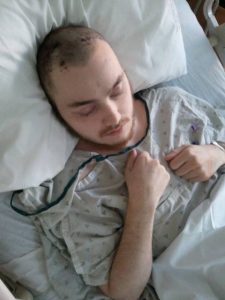
    Ryan was having seizures, yet he was told he was faking them. When Zona protested, she was told by a nurse entrusted with Ryan’s care, “Your son is not having seizures. What is wrong with you? Do you want him to have seizures?”

    In all the E.R. visits, there was ONE brain scan. The family was told the surgery was successful and whatever was going on, if anything, was completely unrelated to his decompression surgery at their hospital.

    On the last visit to this particular hospital, the chief neurosurgeon refused to treat him neurologically and ordered a psychiatric evaluation instead. After speaking with Ryan, the psychiatrist said, “I do not believe you are crazy, but you are a bit of a wimp.”

    Zona was livid and chased everyone out of his room. She then immediately took Ryan to another, smaller hospital. It was obvious to the triage nurse that Ryan was in serious trouble. He was gaunt, having lost 30-plus pounds in three months. He had nystagmus, and his vital signs reflected the pain and distress he was experiencing. Scans showed brainstem slumping and his neck, literally, had no support. Zona was told that “too much bone had been removed,” and that he needed emergent intervention.

    The doctors recommended immediate surgery to correct the horribly botched decompression. However, they suspected that he had meningitis, due to a fever, so they wanted to confirm and aggressively treat that before opening him back up. They began I.V. antibiotics and Dilaudid.

    Again, Zona helplessly waited by his side for more test results. She was slightly relieved that there was finally a team of people looking after her child who believed them, but as she watched her child dozing from the pain medication, she barely recognized him. He was thin, with hollow, sunken eyes, and his weak, frail arms were drawn to his chest. Hands clenched in fists, he laid in a semi-fetal position. She wanted to know how this had happened. It had been a surreal, awful three months, and she wondered if there would be enough time to save him. Tragically, there was not.

    Ryan suffered a fatal seizure the following morning that collapsed his brainstem, and he never woke up. He was pronounced brain dead, August 11th, 2013.

    After Ryan’s death, it was discovered that he did not have an infection at all. According to an independent attorney’s assessment of Ryan’s medical records, there were at least nine opportunities for the health professionals, whom Zona trusted, to save Ryan’s life. The investigator called Ryan’s treatment barbaric and inconceivable. He, like all of us, want to know how this young man was so callously discarded and left to suffer until his untimely death. That question will never be answered. It is incomprehensible how the “professionals” who did have contact with Ryan, not only shunned him, but covered up evidence of medical injustice in order to protect their establishments, surgeons, and other health care workers.

    Ryan’s severe, post-decompression, decline was obvious. Ryan was aware that he was in critical condition. He knew he was not going to survive. Before he died, he told Zona, “Make sure everyone knows what happened.” She did that and more.

    Zona wanted the world to know who Ryan was and about the loving gifts he left behind. The medical establishment failed Ryan and his family, but he remains a true hero. Upon his death, several families received the gift of life through Ryan’s organ donation-including his mother, Zona. The day after Ryan died, she was in surgery receiving her child’s kidney.

    There are times when Zona, naturally, wondered what she could have done differently, but the answer to that is simple: Without advocacy and awareness, hindsight is 20/20. There was nothing more she could have done. She tried everything in her power that she knew to do at that time. Because this was being reiterated by the doctors, she had faith that he was in good hands and that he would recover fully. There was no playbook she could consult on how to advocate for her child. She was in a surreal state of shock, disbelief and fear. She had no frame of reference to show her that the medical professionals in charge of Ryan’s care were terribly wrong, and negligent in the very least. She had to believe the doctors whose opinions and advice we are taught to trust. After all, doctors are the ones who have the medical degrees and they know best, right? No.

    From the time Ryan was decompressed to the day he died, Zona made several calls to get Ryan help, but nobody would listen! Zona’s desperate attempts to alert the medical staff of Ryan’s worsening condition were to no avail. Nobody helped! Nobody cared! Nobody listened.

    Zona took the pain from this unimaginable nightmare and turned into an unrelenting drive to educate other families who are caught up in the trap of medical injustice. She became a fierce advocate for patient safety and rights with the hope that no other child will suffer the way Ryan did. She also helped parents navigate the medical system so that they may learn from her experience. She vowed to work feverishly to bring about awareness and authorized a documentary about Ryan’s life and struggle with Chiari Malformation.

    On Sunday, May 14th, 2017, Mother’s Day, Zona McGee, succumbed to metastatic lung cancer that she acquired from the anti-rejection drugs she was given to save Ryan’s kidney. Her death is a tremendous loss to our community. Her family and friends miss her more than any of my words can express.

    Zona’s worst fear was that Ryan would be forgotten and that her promise, to let everyone know his story, would end with her life. I promised we will never let that happen. We never will.

    Rest in peace, beautiful angels.

    Please support Zona’s Visions:

    Zona’s Blog Zona-Life On The Waitlist

    Ryan’s Awareness Page: Ryan’s Voice Chiari Patient Awareness

    Please support the documentary Writing For Ryan and view the documentary trailers and share the website link as well.
    www.chiaridocumentary.com

    Gianna Soares
    Writing For Ryan
    Updated 01-21-2018
    For the exclusive use of Chiari Bridges, as per Zona’s request.

  • Health & Fitness: Walking In Your Power!

    Health & Fitness: Walking In Your Power!

    After years of having our symptoms dismissed, having our pleas for help and understanding seemingly fall on deaf ears by our doctors (and many times our friends and family as well), it can be a relief to finally have a name for what has gone so horribly wrong with us. The relief is short-lived however, as we begin to realize the full scope of all that is really wrong with us. Although surgery can be extremely successful for some, many of us are left with some degree of symptoms or complications to deal with. For those of us who also have a connective tissue disorder, such as Ehlers-Danlos Syndrome (EDS), the issues with our tissues can seem endless. The thought of “getting healthier” can seem like a daunting task. We do not have control over every aspect of our health, or every aspect of our fight, but we are not powerless! We do have control over some lifestyle choices, that can help improve our day-to-day lives.

    MAINTAIN A POSITIVE ATTITUDE:
    The single most important item within our control is our attitude! We don’t have to ignore our reality or turn a blind eye to the negative aspects of our conditions to have a positive attitude. We can choose to frame things in a positive light. For example, if I am no longer able to walk as far as I could this time last year, I can look upon that situation with an air of defeat… or I can remind myself that I was also unable to walk that far three years ago, but with determination, with time I made progress! It may be unfair that I must start over again, but I am worth every ounce of effort that it takes to do so. I can acknowledge the unfairness, and then choose to focus on making progress towards my goal. A positive attitude is not going to will Chiari or EDS away, but it can improve our experience of living with these conditions.

    CHOOSING FOODS WITH YOU IN MIND:
    With connective tissue disorders, and the myriad of effects they can have on our bodies, eating healthfully can feel like walking through a minefield. Mast cell issues can cause sudden or intermittent allergic reactions to a wide variety of foods. Dysautonomia can require us to consume large amounts of salt (and still may end in nausea and vomiting). We are more prone to gastroparesis, gastric dumping, Irritable Bowel Syndrome (IBS), and other gastrointestinal problems that limit our food choices. Despite all these challenges, most of us can make food choices with optimum health in mind. Many EDS experts recommend eating whole, nutritionally dense foods, and taking supplements to help mitigate the vitamin and mineral deficiencies many of us are prone to, due to malabsorption. If inflammation is an issue, we can avoid dairy, sugars, refined flour, fried foods, and replace them with foods that are known to reduce inflammation, such as: salmon, blueberries, beets, broccoli, spinach, and foods cooked in turmeric, ginger, garlic, and olive oil. Most importantly, we can educate ourselves on our various conditions and what the experts on those conditions recommend, discuss this information with our own doctors and develop an individualized plan for ourselves, and apply this knowledge to our everyday life. Knowledge is key with conditions such as ours! While eating well is not going to shrink our cerebellar tonsils or cause our bodies to make collagen differently, it can help improve energy levels, and reduce pain and other symptoms.

    MOVING IS ESSENTIAL TO MOBILITY:
    Despite the pain and the fear, we can choose to move every day and strengthen our bodies as much as possible. Deconditioning is a real issue for many of us who have had such debilitating pain and other symptoms, that even after a successful decompression surgery, we may find ourselves unable to function normally again. And while we may never be 100% again, we usually can gradually improve our strength and endurance through a good physical therapy and exercise program. Experts agree that strong muscles help reduce many of subluxations and soft tissue injuries that are common to us. It isn’t always easy to find the motivation to get up and take a walk or to do those exercises your physical therapist assigns, but we must remind ourselves that we are worth the effort, and that even the very slightest bit of progress, is still progress. As the adage goes, “A journey of a thousand miles begins with one step.”

    We encourage you to fight for better medical care, for more research, for doctors and loved ones to listen to you. But with that also comes a responsibility to do everything you can to take the best care of yourself possible. To follow your doctor’s recommendations (once you find a good one), to eat well, and to stay as active as you possibly can. But you don’t have to go this alone! If no other positive thing comes out of being diagnosed with Chiari or any of its comorbidities, we do promise you this; the Chiari community is full of amazing, inspiring, loving, encouraging people who will stand in your corner and cheer you on through all your challenges, even if no one else will. And we here at Chiari Bridges will be there along the way with tips and advice on living your best life possible with Chiari and all its ugly friends. Remember, pain is inevitable, but suffering is optional!


    [wpedon id=”4396″ align=”center”]

  • The Chiari Malformation Ehlers-Danlos Connection

    The Chiari Malformation Ehlers-Danlos Connection

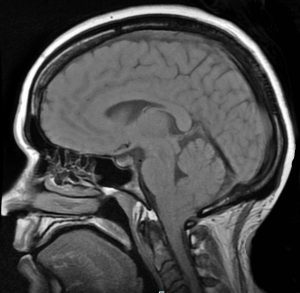
    CHIARI (KEE-AR-EE) MALFORMATIONS ARE FAR FROM RARE, THEY ARE JUST RARELY UNDERSTOOD, EVEN BY MOST MEDICAL PROFESSIONALS. A CHIARI MALFORMATION EXISTS WHEN THE LOWEST PART OF THE HIND BRAIN (THE CEREBELLAR TONSILS) PROLAPSES INTO THE HOLE AT THE BOTTOM OF THE SKULL (FORAMEN MAGNUM), ENTERS THE SPINAL CANAL AND OBSTRUCTS THE FLOW OF CEREBROSPINAL FLUID (CSF), PUTS PRESSURE ON THE BRAIN STEM AND SPINE, AND MAY RESULT IN VARYING DEGREES OF NERVE COMPRESSION.

    PREVALENCE OF CHIARI: Once thought to occur in 1 in 1000 people, it is now believed to be much more frequent of an occurrence. A 2016 pediatric study found it to occur in 1 in 100 children[1]. Since Chiari Malformation Type 1, the most common type, tends to become symptomatic during late teens and early adulthood, it is likely to be much more common when adults are factored in.

    THE CONNECTION: Chiari malformations were originally believed to be caused by a posterior fossa hypoplasia (small area inside the back of the skull) and doctors speculated that lack of maternal prenatal care or drug abuse caused the deformity. However, as studies continue, they are finding that many with this hind brain herniation have connective tissue disorders, such as Ehlers-Danlos Syndromes. Ehlers-Danlos Syndromes involve a mutation in one of the collagen genes. Collagen is a protein that is often described as a “cellular glue” that helps hold the body together. When that glue fails to hold, everything seems to go awry; specifically, as related to Acquired Chiari Malformations: organs tend to prolapse, and bones begin to shift as joint laxity increases (including the bones/vertebrae at the craniocervical junction). They are finding that these acquired Chiari malformations are far more common than originally thought. There are many pathological co-factors that can cause or attribute to the formation of a Chiari Malformation, and most can be linked to these Heritable Disorders of Connective Tissues (HDCTs), including a posterior fossa hypoplasia. In one large study, they found those with a Chiari malformation and no associated co-factors, with only slightly over 52% having a small Posterior Cranial Fossa (PCF). When other co-factors were present, the number of Chiarians found with a small PCF plummeted and therefore it is should be considered acquired until proven otherwise.[2]

    DIAGNOSES: A decade ago, it took 10-20 years from the onset of symptoms to be diagnosed and now it takes an average of 1-2 years, because medical professionals are slowly beginning to look for it. Magnetic Resonance Imaging (MRI) remains the best tool for diagnosis. Some medical professionals believe that a tonsillar herniation of less than 5mm is simply a tonsillar ectopia and only diagnose a Chiari malformation when the descent is > 5mm. However, the 5mm requirement is controversial and many doctors now base their diagnoses not solely on measurements, but rather on symptomology and a combination of other factors (including Cine MRI, a patient’s symptoms, and other relevant factors). Due to the prevalence of connective tissue issues, gravity often proves to be a significant factor and should be taken into account by use of an upright MRI whenever possible.[3] EDS should be diagnosed by a geneticist before surgery is considered.

    TREATMENT OPTIONS: There is no cure for a Chiari malformation, but there are treatment options. When symptoms are minimal and not life-altering, pain management is usually offered. However, it is important to know that while medications may ease some symptoms, Chiari symptoms tend to be progressive. Decompression surgery is the only treatment available to attempt to halt the progression of the damage being done to your Central Nervous System (CNS). The most common reason that decompression surgeries fail, is undiagnosed co-morbid conditions, especially those that can be etiological/pathological co-factors. More than one surgery might be necessary to successfully treat a Chiari malformation and any/all co-morbid conditions and there is a correlation between early surgical intervention and positive surgical outcomes[4].

    [wpedon id=”4396″ align=”center”]


    References:

    1 Eltorai, Ibrahim M. “Rare Diseases and Syndromes of the Spinal Cord” Cham: Springer International Publishing: Imprint: Springer, 2016. Page 43, 15.2, <www.springer.com/us/book/9783319451466>.

    2 Milhorat, Thomas H., et al. “Mechanisms of Cerebellar Tonsil Herniation in Patients with Chiari Malformations as Guide to Clinical Management.” Acta Neurochirurgica, Springer Vienna, July 2010, <www.ncbi.nlm.nih.gov/pmc/articles/PMC2887504>.

    3 Henderson, Fraser C., et al. “Neurological and Spinal Manifestations of the Ehlers–Danlos Syndromes.” American Journal of Medical Genetics Part C: Seminars in Medical Genetics, 21 Feb. 2017, <www.onlinelibrary.wiley.com/doi/10.1002/ajmg.c.31549/full>.

    4 Siasios, John, et al. “Surgical Management of Patients with Chiari I Malformation” International Journal of Pediatrics, Article ID 640127, Hindawi, 2012, <https://www.hindawi.com/journals/ijpedi/2012/640127>.

  • A Bruised Mind – Chiari & Depression

    A Bruised Mind – Chiari & Depression

    Depression is more than simply “feeling sad.” It is a deep dark tunnel of despair that seems to have no end. It manifests as a cohort of symptoms, seeking to wreak havoc in every facet of your life. The activities that you once found enjoyable seem to take more energy than it promises to be worth. Your energy levels plummet, often resembling that of a slug crawling through peanut butter. Insomnia, restlessness, changes in appetite, and memory loss are often present. Mood swings that change without permission, rational and irrational guilt, endless chronic pain, and suppressed emotions (“I’m fine, really.”), create an enormous obstacle that seems impossible to overcome. The chronic illness, loss of identity, and indifferent medical community make treatment challenging. The depression Chiarians feel can be overwhelming and isolating.

    Chronic pain is something Chiarians face on a daily basis. Disabling pain that reduces your quality of life can make once simple tasks difficult to accomplish. Things like taking a shower or cooking become incredibly challenging. Fatigue can set in quickly, that even when we have plans that we’re excited about, just getting ready for them can be enough to put us back in bed. All of this can give us an altered self-perception of feeling useless, which enhances the depression. Chronic pain is both a physical and psychological condition, thus making treatment complex and difficult. Pain can cause depression and depression causes pain; it’s a vicious cycle.[1]

    Beyond the pain aspect, damage to one’s cerebellum is known to have cognitive consequences as well, and that includes emotions. While much of the research is based on the cognitive effects of decompression surgery,[2] many Chiarians have reported a noticeable cognitive decline years before surgery. In some cases, they complained of cognitive issues even before their Chiari diagnosis. One study pinpoints a “reciprocal connection between the cerebellum and hypothalamus” that govern “intellect, emotion, autonomic function, and sensorimotor control.” Another article on Secondary ADHD (Attention Deficit and Hyperactivity Disorder) speaks of the cerebellum and its known connection to ADHD, and even though the cerebellum is almost exclusively thought of in terms of its motor control, “it is the most consistently implicated and also the most robustly abnormal structure in the pathophysiology of ADHD.”[3] The article attributes it to the fact that, the cerebellum is “second in size to only the cerebral cortex, contains more neurons than the rest of the brain combined, and is massively connected to the cerebral cortex.” Among Chiarians, we have long-known that we all suffer from memory issues (both long and short term), anomic aphasia (repeated trouble remembering words), and various other cognitive struggles, and it’s important to remember that all of our thoughts, including those that are depressive in nature, stem from our brains (even our cerebellum).

    Adjusting to the new normal is always a challenge, not only for us, but the ones we love as well. The loss of our former selves and our careers is very hard. Maybe you were a full-time parent or provider, caring for your family and you find yourself the one being cared for by loved ones. You find yourself depending on family and friends to do for you things that you once did for yourself, making you feel like a burden on those you love most. You may experience a sense of helplessness when trying to get friends and family to understand what you are going through. There will be friends and family who cannot or will not try to understand. They will think you are lazy or seeking attention. We must mourn the loss of old selves, careers, sometimes family and friends, as others must mourn their loss of your former self, and learn to embrace the new you in your new normal.



    The struggle to have the medical community work with us, rather than against us, feels like an impossible feat. The worst thing that happens to us when dealing with doctors is being told that everything is in our head (which at least isn’t 100% wrong, but not in the way they mean it). In their ignorance, our doctors often dismiss our symptoms as mere depression, being a hypochondriac, or a drug seeker. They tell you that losing weight will alleviate your problems. That may be true for some things, but no amount of weight loss is going to put your brain back into your skull and it’s hard to focus on exercise when every single step makes you feel like your neck is literally breaking. Instead of admitting that they have limited knowledge on Chiari, they attempt to make you feel stupid, inferior, and a bother to them. It’s so frustrating when those who are have taken an oath to help you and are charging you for that help, are not willing to learn about your condition. You become the educator, teaching those who are interested and willing to learn. You become your own best advocate!

    There is hope. There is a light in the tunnel. The depression may not go away completely, but it can be managed. There are things you can do to help alleviate the symptoms. Joining a support group (in person or online) to connect to those who experience the same things you do can be a tremendous source of support. Encourage family and friends to join support groups to get a better understanding of your condition and to join groups for caregivers so that they have somewhere they can connect with people that are going through the same fears and frustrations that they’re going through (because the Chiari isn’t just affecting you). Get to know others that are fighting your fight, learn from them, stand with them, and maybe even volunteer to help others new in their fight!

    There will be times when your body rails against you, making it difficult to get out of the house. But try to stay as active as you can with something! Try to continue with your favorite hobbies: reading, writing, crocheting and coloring books. Keep your memory working by utilizing crossword puzzles, Sudoku, puzzles (the box kind) and card games like Solitaire. The most important thing is keep talking with people: call a friend or make new ones if you need to. Find a therapist that you like. Share about what you’re going through and show concern for what others are going through. You are worth the fight!


    [wpedon id=”4396″ align=”center”]


    References:

    1 “Depression and Chronic Pain.” Self Help Center, <www.selfhelpcenter.org/pdf-publications/Depression%20and%20Chronic%20Pain.pdf>.

    2 Allen, Philip A., et al. “Task-Specific and General Cognitive Effects in Chiari Malformation Type I.” PLoS ONE, Public Library of Science, 15 Apr. 2014, <www.ncbi.nlm.nih.gov/pmc/articles/PMC3988081/>.

    3 Eme, Robert, and Erin Sheffer. “The Cerebellum and Attention Deficit Hyperactivity Disorder A Case Study of a Cerebellar Chiari 1 Malformation.” The Practitioner Scholar: Journal of Counseling and Professional Psychology, 2012, <www.thepractitionerscholar.com/article/view/10503/7232>.


  • You The Advocate: Getting Started With Self Advocacy

    Self-advocacy starts with believing that you are worthy of love, respect, dignity, and autonomy. This belief will animate everything you do and will affect how others will believe, perceive, and respond to you. It will affect the degree to which others will be able to help you, including your medical team and support systems. Other people can only help us to the degree that we value ourselves and are willing to invest in our own personal well-being. Your self-image and appreciation will affect how well you are able to speak up for yourself and your rights as a well-deserving person and patient.  You deserve the time to express your concerns and ask questions, with an expectation of being listened to, supported, and respected without prejudice. And you have a right to be given all of your information regarding your health, so you can make informed decisions regarding your health and livelihood. Unfortunately, we don’t always get that from our medical professionals or the government agencies that we spend a lifetime paying into for such provisions, so we must be ready to fight for it!


    EMPOWER YOURSELF THROUGH EDUCATION

    Learn and understand your diagnosis. Researching and educating yourself is the single most important tool available to you in self-advocacy. Most of the information available is going to be found online in various articles, websites, videos, and within online support groups. Finding accurate, up-to-date, and reputable sources is paramount. Here at Chiari Bridges, we try to reference the studies and peer-reviewed articles behind our information, so you know the official sources that the information came from and will be better able to justify your requests and concerns to your doctors. Regardless of your source, be prepared to find a lot of conflicting information. These contradictions mainly exist because Chiari and its co-morbid conditions are being researched like never before, so it’s an exciting time, but that fails to give much comfort to those having to fight with their doctors on the existence of every symptom they face.

    Know your rights as a patient and your doctor’s legal responsibilities. Rights and responsibilities are often governed by state and federal laws and are outlined and included in the paperwork given to you from medical practices, health care systems, hospitals, and facilities. Your providers will likely require you to sign that you agree to and understand them. In doing so, these are legally binding for both parties. Thus, you will want to make sure you understand them fully before signing them and make sure you get a copy for your own records (if they don’t give them to you, don’t be afraid to ask for a copy).

    Learn and understand your health insurance. Know what your policy does and does not cover. Become familiar with which doctors, medical services, and facilities are covered. Find out about copays, deductibles, out-of-pocket costs, and other relevant information. Find out if your policy includes out-of-network benefits and associated costs; including out-of-state benefits. If no out of network/or state benefits exist, find out if exceptions can be made. Almost all insurance plans do have some form of exceptions and/or appeals process for this very purpose. There are commonly two stages of appeal, an internal review (your appeal is reviewed in-house) and an external review (where you are specifically asking for a review made by an outside organization that has not been a part of your provision of care and has no conflict of interest).

    Learn about Advance Directives, Living Wills, Durable Healthcare Power of Attorneys, etc. You will want to familiarize yourself with all of these and decide what, if any, is right for you.


    EMPOWER YOURSELF BY DEVELOPING SKILLS AND ACCESSING TOOLS

    Communication Skills and Tools. Learning to know when and how to communicate your needs and desires to others is important, especially when you have a limited amount of time with your doctor. Brevity, clarity, relevancy, problem solving, negotiating and preparation are key skills and tools. It might be beneficial to sit down beforehand and write the specific points that you want to address, and what your ultimate goal is in the appointment. Maintaining a respectful dialogue is always of utmost importance. Keeping your emotions under control is crucial.  Otherwise, your doctor might take you less seriously or assume your symptoms stem from psychological causes.

    Medical Records. As a patient, it is important to always obtain a copy of your medical records and review them for accuracy. It was once thought amongst medical professionals that a patient’s medical records were solely for doctors to communicate amongst themselves. Some medical professionals still hold to this antiquated ideology and become obviously disgruntled that you have chosen to exercise your patient right to not only obtaining your medical records but also, demanding they are 100% accurate. What is listed in those medical records will be used to treat you. It is important they are accurate and are corrected if they are not.

    Keep copies of all imaging and radiology reports. Images are not kept forever, nor are other medical records. Sometimes doctors do not tell you some of the things found in your imaging/reports and other tests because they deem them “incidental” or irrelevant. Sometimes, doctors miss what is obviously clear altogether. Many Chiarians go through years of misdiagnosis before properly being diagnosed. Often, a look back through your medical records will show patterns and assist in the discovery, diagnoses, and treatment.

    Patient Portals. With the advent of portals being used in many practices and facilities, patients have easier, free access to many of their medical records now. The same rules apply to the information retained in the portals in regard to how long they are kept there. Any conversations you might have with your provider through the portals should be saved as well.

    Organization and Preparation. Every person has their own way of “organizing.” This extends to your medical records keeping as well as preparation for appointments. There are some free online resources to help you with this organization. Some like to make a “chart” for their medical records by creating a binder with tabs. Some use digital charts/record-keeping tools for online free or for purchase. Many apps for phones exist to help as well. However you decide to organize is up to you, but is an invaluable tool available to arm and equip yourself in self-advocacy.

    Self-Care and Coping Skills. We often underestimate the necessity of self-care; as well as the power of developing positive, healthy coping skills and techniques. Self-care is pretty standard for all: getting proper nutrition, rest, appropriate and safe exercise, taking meds faithfully, taking time for recreation and refreshment, and tending to the beauty that is your body, mind, and spirit. Everyone has ways they “cope” in life in general and within the framework of chronic illness. It’s important to find the ones that work for you.


    EMPOWER YOURSELF BY FINDING THE RIGHT DOCTOR(S)

    Self-Education. Self-education precedes the ability to find a good doctor. If you are not aware and knowledgeable about your diagnoses and disorders, you will not recognize whether a doctor is the right one for you. Educate yourself on your conditions and on what your potential doctor has published on your conditions: What are their credentials, experience, affiliations, number of cases they have treated, and specialties and sub-specialties? Look for any official publications and scientific journals or other research that your provider may have written. Additional information can be found online through state records and other sources regarding your physician.

    Ask family, friends, and other medical professionals. Find others who have PERSONAL FIRST-HAND doctor/patient experience with the potential provider. Keep in mind a doctor can be a great fit for one patient but not for another. You can also ask for the opinion of your present doctors or other medical professionals.

    Getting 2nd Opinions and When to Find Another Doctor. It is never wrong, always wise, and completely within your rights as a patient to seek a second opinion (or more). If you are facing a potential surgery or procedure that could be risky and/or permanent, it is prudent to get multiple opinions. It is your right to ask for and change doctors at any time or facility. You do not need to give any reason nor explain yourself, though you will likely be asked to do so. Be careful not to burn bridges or become “blacklisted.” Always find a new doctor before leaving the old one.


    EMPOWER YOURSELF BY DEVELOPING YOUR SUPPORT SYSTEM AND GETTING HELP. Being a self-advocate does not mean “going it alone.” Developing and surrounding yourself with a support system is vitally important and many consider it to be “their lifeline” to keep going.

    Local or online support groups. Finding the right local or online group can be just as important as finding the right doctor and educating yourself. Remember, there is a lot of accurate and inaccurate info out there (even amongst our medical professionals). A support group is only as good the respect they have for you in your fight. If they respect the Chiari fight, it will be evident in the way they treat one another and in the accuracy of the information they espouse and share. Online groups each tend to have a different set of rules that members are expected to follow: some allow and encourage advice and recommendations amongst their members, and some do not allow it at all. Not every group will be the right fit for each Chiarian, but you can expect any good group to be kind, supportive, respectful, accurate in the information disseminated, gentle correction of inaccurate information shared respect of your autonomy, choices, and a zero-tolerance for bullying.

    Workplace Support. There are laws that protect you and that can even provide assistance and support within the workplace that you should familiarize yourself with. The Family and Medical Leave Act of 1993 (FMLA) is a federal law in the United States requiring employers to provide employees with up to 12 weeks of job-protected, unpaid leave for qualified medical and family reasons annually; but you must file it as FMLA leave to get the protection.

    School Support. There are programs and opportunities within schools that you should also familiarize and protect yourself with if your Chiarian is in school. In the United States, the US Department of Education has worked hard to incorporate federal laws to help reduce discrimination and increase structured programs to help ensure the success of students with disabilities. As a result, most schools, including colleges, have programs where students with disabilities can get special allowances for recording devices, note takers, removal of time limits on tests, etc. These programs are usually subsidized at a state level and have different names depending on your state, but a school counselor should be able to point you in the right direction. These protections may be limited in privately funded colleges and universities that do not receive any public funds.

    Support and Assistance Programs. There are hosts of programs, assistance, and support to be found in nearly every local area (through county trustees, charitable organizations, and churches), as well as state and federal programs. Just are few examples of help available are assistance with mortgage, rent, utilities, food, clothing, medical bills, medical insurance, free or reduced-cost prescriptions, holiday assistance, back-to-school, free or reduced-cost dental clinics, pro-bono legal help, cash assistance programs, etc.

    Professional Advocate Support. While self-advocacy is important, you might find that you are needing more help than you can accomplish alone. Managing your health can be confusing and overwhelming. Sometimes it can be hard to get your voice heard by the healthcare professionals around you. The healthcare system itself is very complicated. If you are having difficulty finding your way through the complex maze of healthcare, you might want to consider seeking the help of a professional advocate. There are hospital advocates, non-profit patient advocates, for-profit (employer-based) advocates, and independent advocates for you to turn to.

    Family and Friends Support. Chronic illness can take a huge toll on relationships. We all want and need the love and support of our family and friends. Not everyone has this support, making it all the more painful. No two families or friendships are alike. If you find a lack of support amongst your friends and family members, seek to restore it and in the meantime, find another means of support as Chiari is not something you want to fight alone. Support groups are a good alternative means to help find the support you need.

    Counseling Support. Sometimes we all find ourselves struggling to cope. Maybe we lack support or want to protect our relationships by not always talking about our problems to friends and family, yet need an outlet. Finding a therapist can be one of the best things we can do for ourselves. Doing so doesn’t mean you’re crazy or weak. It is a sign of strength and indicates that you value and respect yourself in every facet of your life; which brings us back to the reason we learn to self-advocate in the first place. Believe you are worth it – all of your body, mind, and spirit! If you ever find yourself in a life-threatening crisis, don’t be ashamed to contact a crisis hotline.

    When to get a lawyer. If you believe you are the victim of abuse, harm, malpractice, or neglect, you may need to seek the counsel of a malpractice attorney. If you suspect your workforce rights have been are in danger of being violated, you may want to contact an employment lawyer. If you find yourself no longer able to work, seek a Disability lawyer. Elder lawyers can often be helpful too and are not just for the elderly. If any of your rights have been violated, it may be time to seek counsel.

    Self-advocacy will empower you to know and speak up for yourself, make your own decisions, learn and exercise your rights and responsibilities, learn about your condition(s), and how to get accurate up-to-date information in order to make decisions concerning your care, treatment, and overall well-being. It will help you find the right doctors, support systems, options, resources, and get other help available to you. As you journey along in self-advocacy, you will grow both as a patient and a person. You will also discover many additional ways that self-advocacy benefits and empowers you, and in turn, you’ll be able to help pass those benefits on to others as well.


Chiaribridges

FREE
VIEW