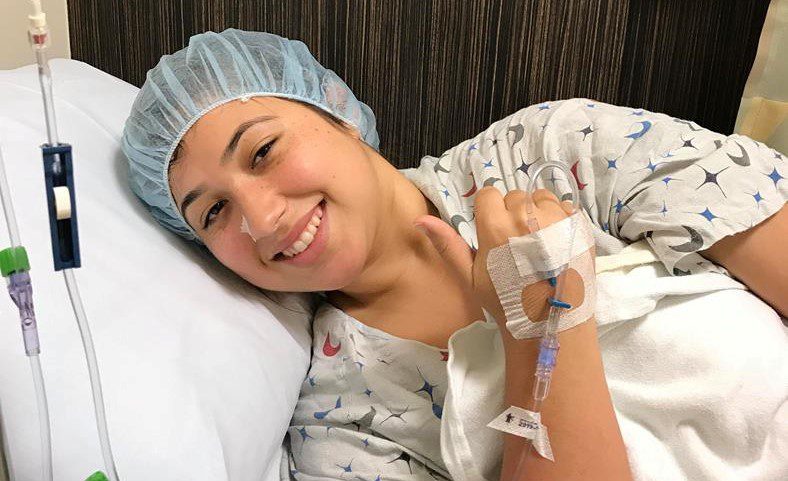
I was what you would consider a “typical developing child” growing up, I did not have any health issues and was able to enjoy much of my childhood. My journey to finding answers in regard my health began at 15 years old, when I began rapidly losing my vision in my left eye. I dealt with severe headaches and the doctors struggled to draw a connection to my declining vision. I went from 20/20 vision to 20/400 in my right eye and 0 vision in my left. I was considered legally blind. I had to relearn how to navigate life with very little vision.
Little would I realize then, that this would be the beginning of a long road with specialists, procedures, frustration and even more frustration. I underwent eye injections to try and reduce the inflammation, leaking blood vessels in my eyes and optic nerve issues. My case stumped some of the biggest hospitals and specialists in the Bay Area. Eventually a doctor had noticed that for over 5 years every brain MRI listed “low lying cerebral tonsils” and decided to dig deeper into this issue. I received a diagnosis of Chiari Malformation Type 1 and had a full CSF blockage. Soon after, I required my first decompression surgery to help make more room to allow CSF to flow and taking pressure off my optic nerves. Things did not change, my positional headache was worse than ever, blindness, nausea/vomiting, joint pain, neuropathy, etc. Nothing improved from surgery.
Fast forward a few years, I was told that a second decompression surgery was required, which I agreed to. It resulted in a rip in my dural patch causing a cerebral spinal fluid leak at the surgical site. After these two decompression and a CSF leak repair surgery, my vision had improved significantly yet I was worse off symptom wise than I was when I initially began noticing changes in my body. Sadly, I was told from my specialists that there was nothing more they could do for me. They referred me to the headache/face pain clinic. After many failed attempts at managing my pain with medications, my doctor mentioned that my symptoms resembled a spinal fluid leak and that there is a doctor who is navigating research and I should be evaluated.
My new leak doctor requested many tests to evaluate for a potential leak, the first being blood work and prolactin levels, brain to spine MRI’s with and without contrast, CT , digital subtraction myelogram, MR myelogram, and the list goes on. After a few months of investigating we were able to confirm that I suffer from spontaneous intracranial hypotension, meaning that I have multiple leaks or suspicious areas in my spine, that happened spontaneously (without known trauma). My doctor mentioned that my Chiari diagnosis is what is classified as an Acquired Chiari Malformation.
The reason I am writing about my story here today is to spread awareness and bring recognition to spontaneous cerebral spinal fluid leaks, because this is something that I will face for the rest of my life. I have now had two decompression surgeries, two CSF leak repairs with hemi-laminectomies and duraplasty, seven epidural blood/fibrin glue patches, and sadly with even more procedures/surgeries to come. In my case, my Chiari was not congenital; it was acquired due to my low cranial pressure from a chronic leak in my spine. Nearly ten years after the onset of my problems, I have very important answers that would’ve been extremely useful before agreeing to have decompression surgeries. My hope is that if you are reading this, and have been diagnosed with Chiari Malformation, you will take the time to consider the possibility of leaks (even if you were told that it is a congenital Chiari Malformation. If I could help one person with sharing my story, someone like me, who is struggling to navigate their care with a map that is upside down, backwards and jumbled, it is worth the time in telling my story! We must be persistent, continue to advocate for ourselves, and truly be willing to learn to educate those around us. Even with some temporary success from surgery, my spontaneous leaks can occur at any time and for any reason or no reason, they do not discriminate.
I had a rough journey with these conditions and I am sharing it to help show how complex we can be and how much we need the medical community to step it up a notch (or ten)! I grew up in Denmark, where I lived when I was diagnosed and had my first surgeries.
I exhibited various pains already from early childhood. As very young child, I would scratch big wounds in my head to my parents’ great frustration. I also suffered from headaches at a very early age, but my older sister had done the same, so when teeth correction helped her it was also hoped it would with me – and it did. Then started the pain in my back, shoulders and arms and that pain slowly moved upwards and developed. I was sent back and forth between physios and rheumatologists but all I got was scoliosis and hypermobility. I was told it was nothing to worry about and just do some physiotherapy. I was in a bad shape when I finished my teens and despite trying, I couldn’t really manage a job. At one point, I was seeing a chiropractor for misplaced hips and he wanted to check the x-ray that the public system had done of my neck and which was deemed clear. Here I had my first “real” diagnosis, Klippel-Feil malformation of c2-c3, which I was then told, could not cause any problems and was common (which it absolutely isn’t).
Years passed by with various periods of severe pain flares, flares that felt nothing like the pains I had before. But no doctor was really believing me. I had a spontaneous collapsed lung a couple of times in this period and ended up with surgery for this (I woke up under this surgery which later also turned out to have a significance). At 25, one day I had a sudden and severe onset of symptoms – a pain in the back of my head feeling like two stabbing knives. This did not resolve and after several attempts with various medicines, that I only got sicker from, I finally saw a new rheumatologist whom again treated me with harsh accusations of laziness and psychological imbalance. I can assure you he was the one bringing on my tears that day, despite the extra severe pain I had been in for weeks. I was placed in the care of the hospital physios and after a while, it became clear to them that there was something really wrong and they got me to see another rheumatologist, who in turn took their word and referred me for an MRI. I had only just turned 26 when I was diagnosed with Chiari 1 Malformation and Syringomyelia – in my full spine.
I did a bit of internet research as information in Danish was very sparse and realized there was a certain number of bad outcomes due to something called Ehlers-Danlos Syndrome, Retroflexed Odontoid and Basilar Invagination. I asked my neurosurgeon, who was supposed to be the best in Denmark at this point, about these things – he claimed I didn’t have any. However, he did agree to refer me for Ehlers-Danlos evaluation. Here I was told I did not have that either. However, I was bordering on a similar connective tissue disorder called Marfan Syndrome, which they still could not diagnose me with due to my heart and eyes not being faulty. I had my first decompression surgery in December 2006. It was rough. I reacted badly to anesthetics and to the morphine and I also lost a lot of spinal fluid. I could not raise myself up the first month which I thought was normal. Slowly, I got better, and imaging showed my syrinx shrinking. Two and a half years later, though, I started experiencing dizziness and nausea and though my first surgeon didn’t believe me, imaging finally showed a big collection of fluid outside my spinal cord originating from a hole in the duraplasty used to close after tonsillar cauterization at my first surgery. I tried talking to the surgeon about concerns of Klippel-Feil and instability, that I had read about, but they would not hear of it and said that for now they would just focus on this issue. So, this was repaired, and I moved to Spain with my boyfriend at the time. I was placed on a disability pension from Denmark and that enrolled me in the Spanish public healthcare. I did, however, in the meantime follow up on my concerns and contacted a specialist, who had written about the Klippel-Feil and Chiari connection, and he straight away stated I had some severe issues with my odontoid and needed it removed and my neck fused to my skull. My first meeting with a surgeon in Spanish health care came up and he just looked at my imaging two minutes then stated my problems were way bigger than Chiari and Syringomyelia. He also diagnosed a severe retroflexed odontoid and Basilar Invagination – so severe he had a hard time understanding how I could breathe, let alone walk. But given my reasonably good condition, he opted to postpone these surgeries as they are big and not without risks.
A couple of years of enjoying the benefits the climate change gave me (and likely putting my head in the sand) went by but then I could no longer ignore the fact that I was getting worse. I was in a rough period with other matters of life, so it took a while before I realized I couldn’t escape the changes in my body. I started losing weight amongst other things and after a quick detour of fear of stomach cancer, I finally realized that everything that was going on was related to my brainstem compression. So, I went back to the neurosurgeon. He ordered some testing but before it could be done, I ended up admitted urgently after I stopped breathing one night. From here started a roller coaster. I didn’t feel right about their suggestions and the surgeon that was going to operate didn’t feel very secure himself even. I ended up getting transferred to a private hospital in Barcelona that calls themselves a “Chiari Institute.” Had I known what I do now, I would never have paid the fee for a filum release, but the doctor claimed this was what I needed and well… It was worth a shot in this urgent situation. He then sent me home, claiming I was cured. I didn’t feel right and breathing through the night was still a problem, so I started sending my imaging to experts around the world and working on getting referred to another hospital in Spain’s public health with higher expertise. All these experts claimed I wouldn’t have long to live unless I had this odontoid approached.
An American expert, however realized I had even more going on and that my gut feeling about the first Spanish hospital was correct – when I confronted them with these things they backed out. He also explained to me why he thought I indeed had this Ehlers-Danlos Syndrome too. Fast forward, long and rough fights with health care and the Danish system that refused to take any responsibility despite the first doctor who didn’t see a bone poking more than a centimeter into my brain and almost crushing my brainstem, another public health Spanish doctor who was mortified they had diagnosed me like they did in Denmark and changed my Chiari 1 diagnose to a Chiari 1.5, I finally found some Spanish doctors in private care, that I would trust to take on my case – and that my parents could just find the money for, through a loan on their house. Ideally, I would have gone to this doctor in America, but price and decline didn’t allow.
October 2016 I finally had a partial odontoidectomy and a fusion, which beyond doubt saved my life. It was a rough ride, for both me and the surgeons. They had to deal with complications related to my anatomy, to the mess the first surgeon in Denmark had left – he had indeed damaged my muscles more than I ever knew – and to the problems relating to the soft tissue. I do know they did a great job, but due to all the mistakes, how complicated my case was and is, I am unfortunately not done. I have ongoing issues and though some of these could have been avoided with the right approach from the beginning, some are just the way it is with these conditions.
I hope that my story will inspire other to take a step back and get better investigated – by real specialists – before letting anyone start cutting. Also, I hope it will serve to see how much we need the medical community to step up and keep up to date with research. These are serious conditions and doctors all over the world are literally playing with our lives. Please help spread awareness – educate yourself and others and ask for raising the standard of care for these complicated conditions.
My introduction to Chiari malformation I (CM1) begins in 1994. I had been married about 7 months and we had just celebrated our first Christmas together as newlyweds. Shortly after the new year, I developed a bad headache that eventually evolved into losing my eyesight in one eye. I went to the eye doctor, who immediately sent me to the hospital. I was diagnosed with Pseudotumor Cerebri and Papilledema, which are known to often accompany Chiari (co-morbid conditions). At the time, we were told that it was likely due to a virus. I had five failed lumbar punctures and finally a successful sixth in radiology, was given Diamox, and the problems went away. Nothing was ever said about Chiari or an abnormal MRI. I also had no idea that I could or should get a copy of the MRI from the hospital, so I could keep my own records. I wasn’t even given any reason on why it might be necessary. I trusted my doctors and they helped resolve the problem with my sight. Little did I realize that it was only the beginning and I was in for the fight of my life!
From 1994 until 2005, I had few further significant issues. I continued to have headaches which I treated with Excedrin and ringing in my ears (tinnitus), which was generally attributed to the aspirin in the Excedrin and sinus issues. In January of 2005, I started having jaw pain. I saw a number of dentists and doctors who couldn’t figure out the problem. I eventually ended up seeing a doctor specializing in pain management who indicated he thought it was Trigeminal Neuralgia (which is another co-morbid disorder of Chiari, but its connection wasn’t made known to us). I was sent to a neurologist, who pointed out I had a 2cm (20mm) herniation, which he said wasn’t enough to worry about, but it was a Chiari malformation. Again, he was the doctor, so we just trusted that it wasn’t something to worry about. The pain worsened: it started lasting for longer periods of time and increased in both intensity and frequency, so I went to the ER on the advice of the neurologist for pain relief. When I arrived, the neurosurgical group that I had an appointment with had left word for me to go to their office, so I could see them. Since my appointment wasn’t for another several weeks, we were thrilled to get in so fast. We were also told I had Trigeminal Neuralgia and that Chiari wasn’t related and that Chiari couldn’t kill you; although they informed me that I would need surgery. I was scheduled for a decompression surgery almost immediately and thought I was cured. The neurosurgeons indicated that a 2cm (20mm) herniation was quite significant and that I was “in good hands.” The decompression was somewhat successful in that it resolved some of my symptoms, but the relief was short lived.
I stopped taking the Gabapentin for Trigeminal Neuralgia but began having trouble with balance issues and nobody was sure why. I was told that the Chiari had nothing to do with any of this and that I was “just lucky” that all my conditions were minor. My surgeon considered Microvascular Decompression (MVD), but said I was “too tight” and the surgery wouldn’t be a good idea. In January 2007 and November 2007, I had rhizotomies performed to deaden the nerve. The rhizotomy only worked for about six months before the pain returned. I had a repeat rhizotomy in November 2007 and that has been successful to date. I was still having a lot of symptoms (that I now know to be Chiari symptoms) but they continued to assume them to be due to the Pseudotumor Cerebri, even though I didn’t have my pressure checked or any sign of a papilledema. In June 2008, I had a Ventriculoperitoneal (VP) shunt put in. It was ligated (tied off) in July 2010 since I had lost weight and the symptoms had switched from what was presumed to be high pressure to low pressure symptoms. Due to my new low-pressure symptoms, they tried several blood patches in an attempt to repair what was assumed to be a leak, even though it was never found on any of the testing. Initially, the blood patches worked well, but over time the blood patches were less effective, and I started getting headaches again. Eventually, the doctors gave up on blood patches as they weren’t helping the headaches and finally, I stopped getting headaches (which we later found out wasn’t uncommon for those who have had long-term CSF leaks.
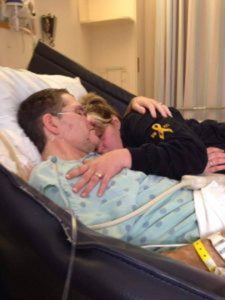
Despite my lack of headaches, I started having neurodegenerative problems: trouble maintaining consciousness, hypersomnolence, severe balance problems, bouts with confusion and cognitive changes. My neurologist became convinced that I needed a second decompression. He discussed my case with my neurosurgeon who initially didn’t think that another decompression would help. He was convinced to perform the surgery and I had the decompression in January 2012. The decompression was very successful for 23 days. After that, I declined rapidly. Over the next year, I developed multiple lung infections, which they presumed to be from my history as a smoker, but in reality, it was due to dysphagia. In January 2013, I was admitted to the hospital for yet another lung infection and by May, I was given a feeding tube. My wife was brought into a meeting with my neurologist where he said I needed to go to a nursing home and that my death could be imminent. I went to the nursing home and did better than they expected. Instead of dying at the nursing home, I improved and was released to go home a month later. I continued to improve enough to have the feeding tube removed that July.
Once home, my condition continued to decline. My wife continued researching and we decided to go and see a Chiari specialist since her research indicated it was the only real way to proceed, especially with a difficult case. In June 2014, we met with one such expert who was able to explain why the first two decompressions failed. Ehlers-Danlos Syndrome and Craniocervical Instability were two of the missing pieces to my puzzle. It was an eye-opening experience and finally, my issues made sense. We discussed several options for surgery, and eventually settled on a date, October 30, 2014. I had my third decompression and this time, a spinal fusion. It was a wild success! Many of my symptoms were resolved immediately. While it was not a cure, it certainly helped me substantially in restoring many functions and my quality of life.
However, in September 2015, I went into a coma while hospitalized for a reduced state of awareness (which coincided with weaning off the Decadron) and the local doctors said it was another failed decompression. In October 2015, I had yet another MRI. While going over the radiologist report, my wife noticed something none of my doctors mentioned, it stated that I had severe Intracranial Hypotension. My wife sent my MRI images to a leak expert and my NY neurosurgeon for further assessment.
In January 2016, I was in another hospital across the country having imaging for the known CSF leak. After the testing was done, a leak was found in my lumbar spine and a location they felt was suspicious on my thoracic spine (where I had old stress fractures and incredibly thin dura, believed to have been causing leaks). There were also bone fragments next to the fractures, so the doctor double reinforced my spine in that area and performed a dural reduction surgery in parts of my thoracic and lumbar spine. I got better until August 2016, when I started experiencing symptoms of a CSF leak. Upon consultation, we decided a blood patch would be the place to start and it resolved my symptoms quickly. As of August 2018, the blood patch has continued to keep me from leaking and no leak symptoms have occurred. While I’m going to be at risk for leaks, and likely leak periodically due to Ehlers-Danlos Syndrome, I will take the results I’ve seen thus far. It’s also interesting to note that while I’ve had a number of unsuccessful patches, this time the post-patch recovery protocol was different in that I laid flat for 2 hours post patch, then 3 days lying flat except to go to the bathroom and eat. I’m convinced that this protocol helped immensely, as the weight of the CSF Is much greater when upright thus increasing the chance of a leak. Also, a blood patch doesn’t end the leak repair, it merely starts it. Once the clotting effect has finished, the next stage occurs, which includes tissue growth to repair the opening. With Ehlers-Danlos Syndrome, this process is often diminished and requires longer than the normal recovery time, which is why I believe many of us have had failed patches.
I am still continuing to heal, and likely will never be returned to my old self. I have been discharged from physical therapy as of December 2017, however I still exercise every day for at least an hour. I know that this is a key part of my healing; there have been a few occasions when I was unable to do my exercises for a few days I notice difficulty in doing my daily activities. In addition, I will not likely be able to work as a paid employee ever again, however, I have been able to provide some help to a variety of people. I enjoy helping others and this works well as if I have a less than optimal day, I can just let anyone who needs my help know that I won’t be available to help them.
My recovery hasn’t been without trouble, as I returned to the hospital once, in the spring of 2018, for what was presumed to be a gall bladder problem. Since I’ve suffered issues with kidney stones, it’s not surprising to me that I have a lot of gall stones. I suspect it has to do with some of the gastrointestinal issues that hEDS brings, but there is nothing definitive. After 2 days of pretty significant pain, the pain subsided and nothing more came of it.
Overall, there have been a number of positive outcomes and I wouldn’t change the decision to have my third decompression & fusion. This has granted me the ability to lead a life, which while not “normal,” is fulfilling.
I am not, and never will be, completely healed. Many of my symptoms have resolved to the point where I can tolerate them and at times, don’t even notice them. While there is no cure for Chiari or the Ehlers-Danlos Syndrome causing it all, there is more healing possible. They are difficult disorders for many reasons and one of the biggest issues is the way it presents itself; for each person, it can be entirely different, making the diagnosis very difficult. I will always have to be monitored for leaks each time the symptoms present themselves, but for now, I find myself thankful to be alive and so very lucky to have the support I do, especially from my wife, my hero!
 I was what you would consider a “typical developing child” growing up, I did not have any health issues and was able to enjoy much of my childhood. My journey to finding answers in regard my health began at 15 years old, when I began rapidly losing my vision in my left eye. I dealt with severe headaches and the doctors struggled to draw a connection to my declining vision. I went from 20/20 vision to 20/400 in my right eye and 0 vision in my left. I was considered legally blind. I had to relearn how to navigate life with very little vision.
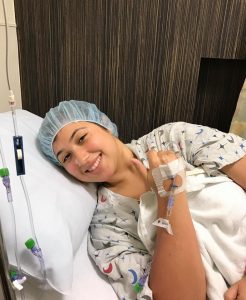 Fast forward a few years, I was told that a second decompression surgery was required, which I agreed to. It resulted in a rip in my dural patch causing a cerebral spinal fluid leak at the surgical site. After these two decompression and a CSF leak repair surgery, my vision had improved significantly yet I was worse off symptom wise than I was when I initially began noticing changes in my body. Sadly, I was told from my specialists that there was nothing more they could do for me. They referred me to the headache/face pain clinic. After many failed attempts at managing my pain with medications, my doctor mentioned that my symptoms resembled a spinal fluid leak and that there is a doctor who is navigating research and I should be evaluated.
 contrast, CT , digital subtraction myelogram, MR myelogram, and the list goes on. After a few months of investigating we were able to confirm that I suffer from spontaneous intracranial hypotension, meaning that I have multiple leaks or suspicious areas in my spine, that happened spontaneously (without known trauma). My doctor mentioned that my Chiari diagnosis is what is classified as an Acquired Chiari Malformation.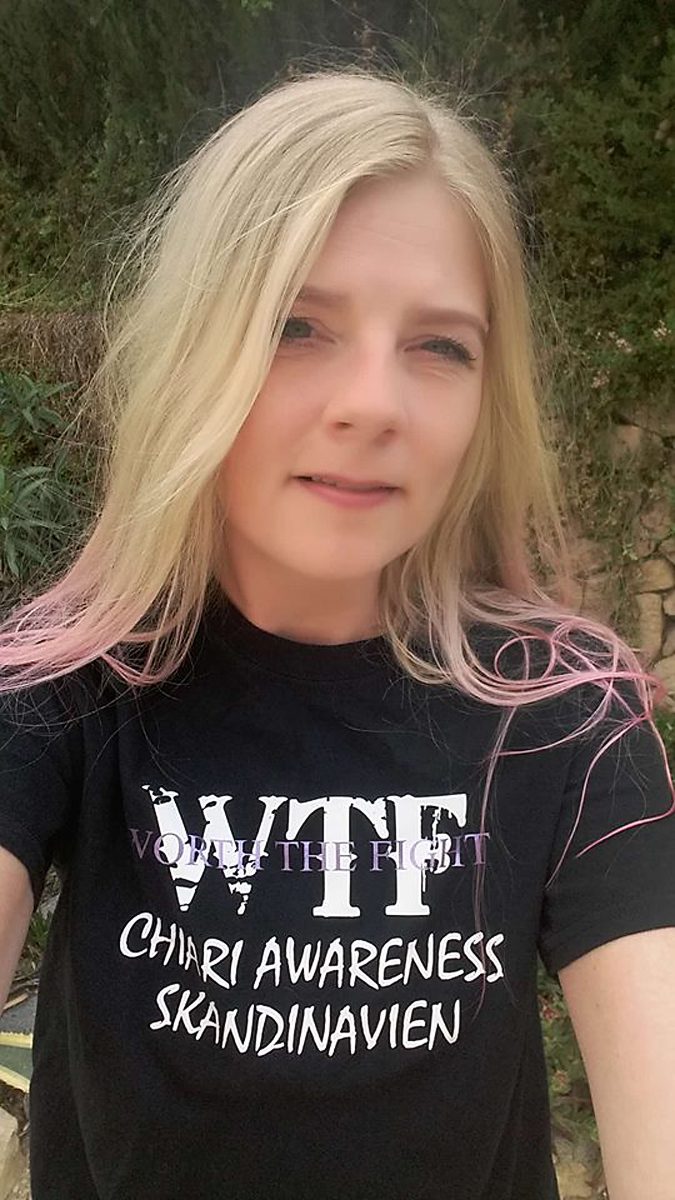
 I had a rough journey with these conditions and I am sharing it to help show how complex we can be and how much we need the medical community to step it up a notch (or ten)! I grew up in Denmark, where I lived when I was diagnosed and had my first surgeries.
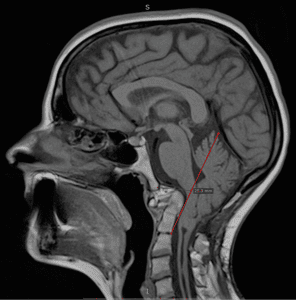 Years passed by with various periods of severe pain flares, flares that felt nothing like the pains I had before. But no doctor was really believing me. I had a spontaneous collapsed lung a couple of times in this period and ended up with surgery for this (I woke up under this surgery which later also turned out to have a significance). At 25, one day I had a sudden and severe onset of symptoms – a pain in the back of my head feeling like two stabbing knives. This did not resolve and after several attempts with various medicines, that I only got sicker from, I finally saw a new rheumatologist whom again treated me with harsh accusations of laziness and psychological imbalance. I can assure you he was the one bringing on my tears that day, despite the extra severe pain I had been in for weeks. I was placed in the care of the hospital physios and after a while, it became clear to them that there was something really wrong and they got me to see another rheumatologist, who in turn took their word and referred me for an MRI. I had only just turned 26 when I was diagnosed with Chiari 1 Malformation and Syringomyelia – in my full spine.
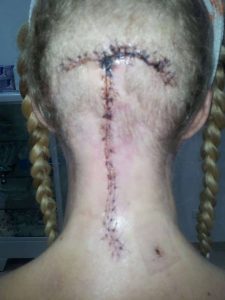 I did a bit of internet research as information in Danish was very sparse and realized there was a certain number of bad outcomes due to something called Ehlers-Danlos Syndrome, Retroflexed Odontoid and Basilar Invagination. I asked my neurosurgeon, who was supposed to be the best in Denmark at this point, about these things – he claimed I didn’t have any. However, he did agree to refer me for Ehlers-Danlos evaluation. Here I was told I did not have that either. However, I was bordering on a similar connective tissue disorder called Marfan Syndrome, which they still could not diagnose me with due to my heart and eyes not being faulty. I had my first decompression surgery in December 2006. It was rough. I reacted badly to anesthetics and to the morphine and I also lost a lot of spinal fluid. I could not raise myself up the first month which I thought was normal. Slowly, I got better, and imaging showed my syrinx shrinking. Two and a half years later, though, I started experiencing dizziness and nausea and though my first surgeon didn’t believe me, imaging finally showed a big collection of fluid outside my spinal cord originating from a hole in the duraplasty used to close after tonsillar cauterization at my first surgery. I tried talking to the surgeon about concerns of Klippel-Feil and instability, that I had read about, but they would not hear of it and said that for now they would just focus on this issue. So, this was repaired, and I moved to Spain with my boyfriend at the time. I was placed on a disability pension from Denmark and that enrolled me in the Spanish public healthcare. I did, however, in the meantime follow up on my concerns and contacted a specialist, who had written about the Klippel-Feil and Chiari connection, and he straight away stated I had some severe issues with my odontoid and needed it removed and my neck fused to my skull. My first meeting with a surgeon in Spanish health care came up and he just looked at my imaging two minutes then stated my problems were way bigger than Chiari and Syringomyelia. He also diagnosed a severe retroflexed odontoid and Basilar Invagination – so severe he had a hard time understanding how I could breathe, let alone walk. But given my reasonably good condition, he opted to postpone these surgeries as they are big and not without risks.
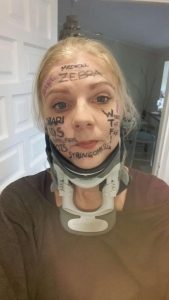 A couple of years of enjoying the benefits the climate change gave me (and likely putting my head in the sand) went by but then I could no longer ignore the fact that I was getting worse. I was in a rough period with other matters of life, so it took a while before I realized I couldn’t escape the changes in my body. I started losing weight amongst other things and after a quick detour of fear of stomach cancer, I finally realized that everything that was going on was related to my brainstem compression. So, I went back to the neurosurgeon. He ordered some testing but before it could be done, I ended up admitted urgently after I stopped breathing one night. From here started a roller coaster. I didn’t feel right about their suggestions and the surgeon that was going to operate didn’t feel very secure himself even. I ended up getting transferred to a private hospital in Barcelona that calls themselves a “Chiari Institute.” Had I known what I do now, I would never have paid the fee for a filum release, but the doctor claimed this was what I needed and well… It was worth a shot in this urgent situation. He then sent me home, claiming I was cured. I didn’t feel right and breathing through the night was still a problem, so I started sending my imaging to experts around the world and working on getting referred to another hospital in Spain’s public health with higher expertise. All these experts claimed I wouldn’t have long to live unless I had this odontoid approached.
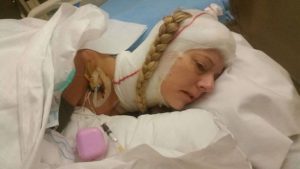 October 2016 I finally had a partial odontoidectomy and a fusion, which beyond doubt saved my life. It was a rough ride, for both me and the surgeons. They had to deal with complications related to my anatomy, to the mess the first surgeon in Denmark had left – he had indeed damaged my muscles more than I ever knew – and to the problems relating to the soft tissue. I do know they did a great job, but due to all the mistakes, how complicated my case was and is, I am unfortunately not done. I have ongoing issues and though some of these could have been avoided with the right approach from the beginning, some are just the way it is with these conditions.
![The Christopher Ellington Story – A Chiari Warrior’s Journey [Updated]](https://dev.chiaribridges.org/wp-content/uploads/2017/05/hosp1.jpg)